

Infosites are purpose-built informational websites designed to educate users, answer search queries, and establish topical authority in Google Search. Unlike traditional sales-focused websites, Infosites prioritize content quality, search intent, page experience, and trust signals. When developed correctly, Infosites become long-term organic traffic assets that align with Google Search Quality Guidelines and modern SEO standards.
Introduction
At MonthlyWebsiteDesign, we specialize in creating high-quality Infosites—purpose-built informational websites designed to educate, inform, and establish digital authority. Unlike traditional sales-driven websites, Infosites prioritize content quality, user intent, and trust, ensuring that every page delivers real value to visitors. The primary goal is to answer search queries comprehensively and help users fully understand a topic without leaving the page or searching elsewhere.
Infosites are carefully structured with topic-focused clusters, strong internal linking, and expert-authored content to demonstrate credibility and satisfy Google’s Page Quality and Needs Met criteria. By emphasizing helpfulness and transparency, these websites align perfectly with Google’s mission to “organize the world’s information and make it universally accessible and useful.”
In today’s competitive digital landscape, businesses need sustainable, long-term strategies for organic growth. MonthlyWebsiteDesign leverages best practices from Google Search Central, SEO industry leaders, and UX research to build Infosites that are fast, mobile-friendly, and secure while remaining fully informative.
This comprehensive guide explores what Infosites are, why Google favors them, how they address search intent, the importance of E-E-A-T, YMYL considerations, and the strategies that ensure long-term traffic, trust, and authority. Whether you are in education, technology, finance, health, or local services, this guide will show you how to create an Infosite that users and search engines both trust.
What Is an Infosite?
An Infosite is a website created primarily to provide information, not to aggressively sell products or services. The core goal is to satisfy user intent by offering accurate, comprehensive, and well-structured content.
Google categorizes these pages under informational search intent, often referred to as “know” and “know simple” queries. According to Google Search Central, informational pages should help users fully understand a topic without requiring additional searches.
Key characteristics of an Infosite include:
- Clear educational purpose
- Topic-focused content clusters
- Minimal intrusive advertising
- Strong internal linking
- Transparent authorship and credibility signals
Infosites are especially effective for industries such as technology, education, health awareness, digital marketing, SaaS, finance education, and local service explanations.
Why Google Prefers High-Quality Infosites
Google’s mission is to “organize the world’s information and make it universally accessible and useful.” Infosites align directly with this mission because they exist to help users, not manipulate rankings.
Google evaluates pages using Page Quality (PQ) and Needs Met criteria, explained in detail in the official Search Quality Evaluator Guidelines.
According to these guidelines, high-quality informational pages must:
- Have a beneficial purpose
- Demonstrate expertise and trust
- Provide satisfying main content
- Avoid deceptive or exaggerated claims
Infosites that meet these criteria naturally outperform thin content websites, affiliate spam sites, and auto-generated blogs.
Understanding Search Intent for Infosites

Search intent is the foundation of every successful Infosite. Google classifies intent into four major types:
- Informational
- Navigational
- Commercial
- Transactional
Infosites focus primarily on informational intent, which SEO experts at Ahrefs describe as the largest segment of all Google searches.
Examples include:
- “What is website accessibility?”
- “How does SEO work?”
- “Best practices for page speed optimization”
By aligning content with intent, Infosites reduce bounce rates, increase dwell time, and improve overall page satisfaction—important behavioral signals for search performance.
Main Content (MC): The Backbone of an Infosite
Google defines Main Content (MC) as the part of the page that directly helps achieve its purpose. For Infosites, MC includes long-form articles, guides, tutorials, and explainers.
According to Google Page Experience documentation, high-quality MC must be:
- Original
- Comprehensive
- Helpful
- Clearly written
- Free from unnecessary filler
At Monthly Website Design, Infosites are structured so that each page answers one primary topic thoroughly, often supported by subtopics and FAQs.
Content Depth vs Thin Content
Thin content is one of the most common reasons websites fail to rank. Google defines thin content as pages that offer little or no value beyond what already exists.
SEO authority Moz explains that thin content often includes:
- Short articles with no depth
- Copied or rewritten material
- Auto-generated text
- Over-optimized keyword stuffing
Infosites avoid this by focusing on topical depth, not word count alone. Each page is designed to be the best possible answer to a specific query.
The Role of E-E-A-T in Infosites
Google uses E-E-A-T (Experience, Expertise, Authoritativeness, Trustworthiness) as a framework to evaluate content quality.
Official guidance from Google Search Central highlights that content should be created “by people, for people.”
Infosites demonstrate E-E-A-T by:
- Publishing expert-level content
- Including author information
- Citing reputable sources
- Keeping content updated
- Being transparent about ownership
This is especially important for YMYL (Your Money or Your Life) topics.
YMYL Considerations for Infosites
YMYL topics include content that can affect a person’s health, finances, safety, or well-being. Google applies stricter quality standards to these pages.
Examples:
- Financial education
- Medical information
- Legal guidance
- Security advice
Google explicitly states that YMYL pages require higher levels of trust and accuracy in the Search Quality Evaluator Guidelines.
Infosites covering YMYL topics must:
- Reference authoritative institutions
- Avoid speculation or misleading claims
- Clearly explain limitations
- Encourage professional consultation when necessary
Supplementary Content (SC) and User Experience
While Main Content fulfills the primary purpose, Supplementary Content (SC) enhances usability. SC includes:
- Navigation menus
- Internal links
- Related articles
- Table of contents
- Breadcrumbs
UX experts at Nielsen Norman Group emphasize that good usability increases user satisfaction and engagement—signals Google indirectly rewards.
Infosites are structured to make information easy to explore without overwhelming users.
Internal Linking Strategy for Infosites
Internal links help Google understand site structure and topical relationships. According to Google Search Central – Links, internal links assist with crawling and indexing.
Effective internal linking:
- Distributes authority across pages
- Improves user navigation
- Strengthens topical relevance
- Reduces orphan pages
Monthly Website Design builds Infosites using content silos and logical internal linking to support long-term SEO growth.
Infosites vs Sales-Focused Websites
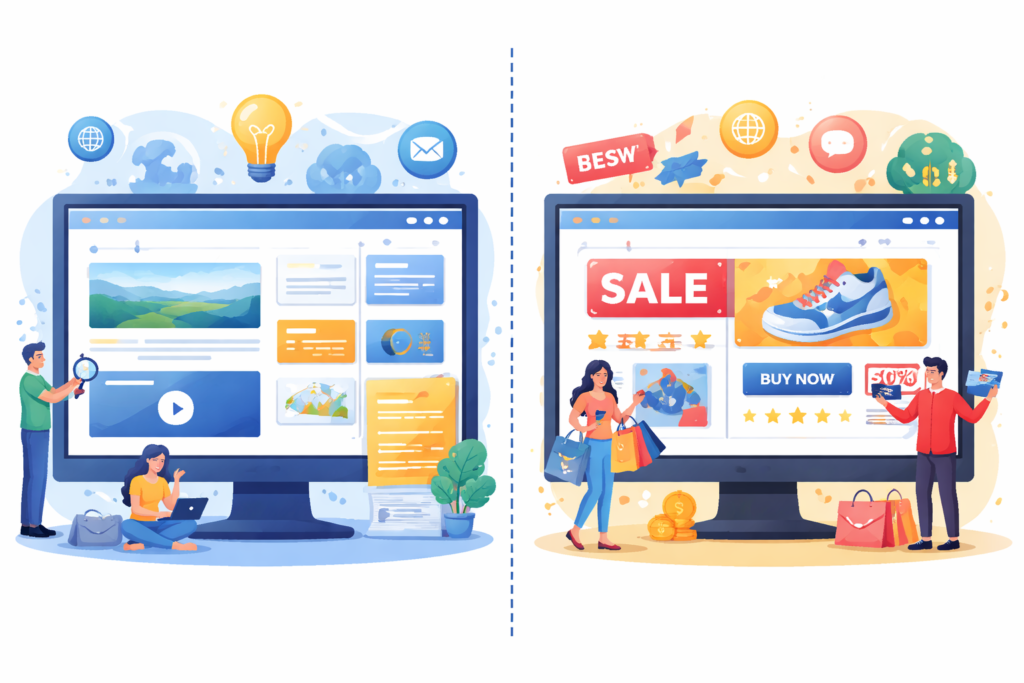
Sales websites prioritize conversions, while Infosites prioritize education. Google does not penalize commercial intent, but it strongly discourages disguising sales pages as informational content.
SEO research from Search Engine Journal confirms that misleading intent results in poor rankings and low trust.
Infosites work best when:
- Education comes first
- Monetization is secondary
- CTAs are subtle and relevant
- Content integrity is preserved
Authority Signals and Outbound Links
Linking to high-authority websites is a quality signal when done correctly. Google encourages citing reputable sources to support claims and improve trust.
High-authority examples include:
- Google documentation
- Government websites
- Universities
- Recognized industry publications
Outbound linking best practices are discussed by Search Engine Journal.
Infosites use outbound links to:
- Support factual statements
- Increase credibility
- Improve content trustworthiness
Content Freshness and Updates
Google favors content that stays accurate over time. According to Search Engine Land, freshness matters especially for evolving topics.
Infosites should:
- Update statistics regularly
- Refresh outdated references
- Expand sections when trends change
- Add new internal links
This keeps rankings stable and improves long-term performance.
Page Experience and Core Web Vitals
Page experience plays a critical role in Infosite success. Google measures experience using Core Web Vitals, including loading speed, interactivity, and visual stability.
Official metrics explained by Google Page Experience.
Monthly Website Design ensures Infosites are:
- Fast loading
- Mobile-friendly
- Secure (HTTPS)
- Visually stable
Mobile Optimization for Infosites
Google uses mobile-first indexing, meaning the mobile version of your site is considered the primary version.
Mobile SEO best practices are detailed in Google Mobile SEO Guide.
Infosites must:
- Use responsive design
- Maintain readable text
- Avoid intrusive popups
- Optimize touch navigation
How Infosites Drive Long-Term Organic Traffic
Infosites are designed for sustainability. Evergreen informational queries continue to generate traffic months or even years after publication.
Content marketing research from HubSpot shows evergreen content delivers consistent ROI over time.
This makes Infosites ideal for businesses seeking:
- Predictable traffic
- Reduced ad dependency
- Authority building
- Brand trust
Infosite Content Architecture
A well-planned content architecture is essential for Infosites to perform in Google Search. Content architecture refers to how pages, categories, and subtopics are organized on a website. Proper structure helps both users and search engines understand relationships between topics.
Key principles of Infosite content architecture:
- Content silos: Group related topics together to reinforce authority in a niche.
- Hierarchical navigation: Ensure main topics are easily accessible from the homepage, with subtopics nested logically.
- URL structure: Use descriptive, readable URLs that reflect topic hierarchy.
According to SEO experts at Yoast, a clear content structure not only improves crawl efficiency but also enhances user satisfaction, both of which contribute to ranking improvements.
Keyword Research Methodology for Infosites
Keyword research is the foundation of any successful Infosite. The goal is to identify informational queries with high search volume, low to medium competition, and clear user intent.
Recommended methodology:
- Start with seed keywords: Use Google Suggest, Ahrefs Keyword Explorer, or SEMrush.
- Analyze search intent: Ensure each keyword aligns with informational intent rather than transactional or commercial intent.
- Check SERP features: Identify whether featured snippets, “People Also Ask,” or knowledge panels appear.
- Assess competition: Evaluate top-ranking pages for depth, quality, and E-E-A-T signals.
- Map keywords to content: Assign primary, secondary, and long-tail keywords to specific pages.
HubSpot research emphasizes that keyword research for informational content should focus on user needs over keyword density, which aligns perfectly with Google’s “helpful content” guidelines.
Blogging Frequency Strategy
Maintaining a consistent publishing schedule improves Google’s perception of authority. However, quality always outweighs quantity for Infosites.
Best practices:
- Start with 2–3 articles per week to establish momentum.
- Prioritize evergreen content that remains relevant over time.
- Use a content calendar to plan topic clusters, seasonal trends, and updates.
- Refresh old posts periodically to maintain relevance and ranking.
According to Content Marketing Institute, consistent posting combined with strategic updates significantly improves organic traffic and user engagement for educational websites.
Infosites for Local SEO

Infosites can support local SEO when relevant. Localized informational content strengthens credibility and helps businesses appear in Google Maps and local search packs.
Local SEO tips for Infosites:
- Include location-based examples in content.
- Optimize meta titles, descriptions, and headings with local modifiers.
- Use structured data markup for local business information.
- Create location-specific FAQs to target neighborhood-specific queries.
Moz confirms that combining authority content with local SEO tactics boosts visibility for local informational searches without compromising the integrity of your Infosite.
Conversion Paths Without Harming Trust
Even though Infosites are informational, subtle conversion opportunities can exist without damaging trust.
Examples include:
- Newsletter sign-ups for updates on the topic.
- Related product or service links presented transparently.
- Soft CTAs like “Learn More” leading to an in-depth resource or demo.
Search Engine Journal emphasizes that transparency in conversion paths preserves E-E-A-T while allowing monetization opportunities.
Common Mistakes to Avoid
Infosites often fail due to avoidable mistakes:
- Keyword stuffing: Over-optimizing for search engines instead of users.
- Thin content: Publishing pages with minimal value or copied material.
- Neglecting updates: Letting statistics and references become outdated.
- Ignoring UX: Poor navigation, slow load speed, or unresponsive design.
- Misleading intent: Presenting sales content as informational, which damages trust.
Avoiding these mistakes ensures sustained traffic growth and authority establishment.
FAQs
Q1: What is the primary difference between an Infosite and a blog?
A: Blogs can be casual or opinion-based, while Infosites focus on structured, authoritative information designed to answer user queries thoroughly.
Q2: Can Infosites include monetization?
A: Yes, as long as monetization doesn’t compromise trust or overshadow educational content.
Q3: How often should I update my Infosite content?
A: Update evergreen content every 6–12 months, and time-sensitive content more frequently as trends evolve.
Q4: Are internal links necessary for Infosites?
A: Absolutely. They help Google understand site structure, improve crawlability, and guide users to related topics.
Q5: What is E-E-A-T, and why is it important?
A: Experience, Expertise, Authoritativeness, Trustworthiness. It’s Google’s framework for evaluating content quality, especially for YMYL topics.
Q6: Can small businesses benefit from Infosites?
A: Yes, small businesses can build local or niche authority, driving consistent organic traffic without heavy ad spend.
Q7: How long does it take to see results from an Infosite?
A: Typically 3–6 months for noticeable rankings, but full authority may take 12+ months depending on competition and content depth.
Q8: Should I hire experts to write Infosite content?
A: Preferably, especially for YMYL or technical topics. Expert-authored content signals higher trust and authority.
Q9: Can an Infosite rank without backlinks?
A: Yes, if content is comprehensive and user-focused, but authoritative backlinks accelerate ranking potential.
Q10: What metrics indicate Infosite success?
A: Organic traffic growth, low bounce rates, high dwell time, engagement with internal links, and improved SERP visibility.
Conclusion
Infosites represent one of the most effective strategies for building long-term, sustainable organic traffic, and at MonthlyWebsiteDesign, we specialize in creating these authoritative, content-driven websites. By focusing on helpful, high-quality informational content, Infosites establish trust, demonstrate expertise, and provide genuine value to visitors—all key signals that Google rewards in its search rankings.
Our approach ensures that every Infosite is structured for clarity, with strong internal linking, clear content hierarchy, and easy navigation to enhance both user experience and search engine understanding. We prioritize E-E-A-T principles, referencing reputable sources and including author expertise, especially for YMYL (Your Money or Your Life) topics where accuracy and credibility are critical.
By implementing robust content architecture, strategic keyword research, consistent blogging, and thoughtful user engagement paths, Infosites become more than just websites—they are digital assets that attract and retain visitors over months and years. Regular content updates, mobile optimization, and page experience improvements ensure that these sites remain relevant, trustworthy, and competitive in the constantly evolving Google search landscape.
At MonthlyWebsiteDesign, we understand that building a successful Infosite is not about short-term gains or manipulative SEO tactics. It is about creating lasting value, brand authority, and predictable organic growth. By following the strategies outlined in this guide, businesses can confidently develop Infosites that provide accurate, reliable information to users, earn Google’s trust, and continue generating meaningful traffic for the long term.