

Discover how Infosites improve SEO, authority, trust, and conversions in 2026. Learn advanced strategies for creating high-performing information websites optimized for user experience, search rankings, and long-term business growth.
Introduction
In today’s competitive digital landscape, businesses need more than a simple online presence. Modern users expect informative, trustworthy, fast-loading, and expertly structured websites that answer questions clearly while guiding them toward meaningful actions. This is where Infosites have become one of the most effective website models for brands seeking authority, visibility, and sustainable growth.
An Infosite is an information-focused website designed to educate users, build trust, improve search visibility, and create a seamless user experience. Unlike overly promotional websites that prioritize aggressive selling, Infosites focus on delivering value first. This strategy aligns closely with modern search engine expectations and evolving user behavior patterns. Search engines increasingly reward websites that demonstrate expertise, depth, usability, and reliability.
At Monthly Website Design, businesses are recognizing that well-structured Infosites can significantly improve organic traffic, customer trust, and conversion quality. A professionally developed Infosite supports long-term digital marketing goals by combining SEO, user experience, content architecture, performance optimization, and authority-building strategies into one cohesive platform.
Modern Infosites are no longer basic knowledge portals. They now include interactive content, strategic navigation systems, educational resource hubs, optimized service pages, structured data implementation, advanced mobile experiences, and conversion-focused layouts. These websites help businesses establish credibility while simultaneously improving rankings for competitive keywords.
This guide explores everything you need to know about building and optimizing Infosites in 2026, including SEO strategies, content planning, technical performance, user experience, authority building, mobile optimization, security, conversion improvement, and future trends shaping the industry.
Understanding What Infosites Really Are
The Core Purpose of an Infosite
An Infosite is fundamentally designed to educate users through structured, high-value information. Rather than focusing purely on transactions, these websites prioritize clarity, learning, trust-building, and audience engagement. Businesses use Infosites to establish authority in their industries while helping users make informed decisions.
Modern search engines increasingly prioritize websites that satisfy informational search intent. Users frequently search for answers, guidance, comparisons, tutorials, and detailed explanations before making purchasing decisions. Infosites perform exceptionally well because they align with this user behavior. When visitors consistently find useful information on a website, they develop trust in the brand behind it.
Unlike traditional brochure websites, Infosites emphasize content architecture, internal linking, topic depth, and content discoverability. These elements work together to create a comprehensive knowledge ecosystem that improves both user experience and search visibility.
An effective Infosite combines educational content with intuitive navigation and technical excellence. Every page should serve a meaningful purpose while contributing to broader SEO and business goals.
How Infosites Support Modern SEO
Search engines reward websites that demonstrate topical authority. Infosites excel at this because they allow businesses to cover subjects comprehensively across multiple interconnected pages. This creates a strong semantic relationship between content topics, which improves keyword relevance and search visibility.
Google’s emphasis on helpful content and E-E-A-T principles makes Infosites especially valuable in competitive industries. According to <u>Google Search Essentials</u>, websites should focus on creating people-first content that demonstrates expertise and trustworthiness.
Google Search Essentials
Infosites naturally support this approach by enabling businesses to publish educational guides, tutorials, industry insights, FAQs, case studies, and detailed service explanations. These content formats help search engines understand the website’s expertise and relevance.
Strong internal linking structures further enhance SEO performance by helping search engines crawl and interpret content relationships efficiently. An Infosite becomes increasingly authoritative over time as more high-quality content is added strategically.
Why Businesses Are Investing in Infosites
Businesses across industries are investing heavily in Infosites because they deliver long-term value beyond short-term advertising campaigns. Paid traffic disappears when advertising budgets stop, but a well-optimized Infosite can continue attracting qualified traffic for years.
Infosites also help businesses nurture customers throughout the buying journey. Many users are not ready to purchase immediately. Educational content builds confidence gradually and positions the business as a trusted authority.
Another major advantage is brand differentiation. In crowded markets, businesses that provide meaningful educational experiences stand out from competitors relying solely on promotional messaging. Users increasingly prefer brands that demonstrate expertise transparently.
Additionally, Infosites support multiple marketing channels simultaneously, including SEO, email marketing, social sharing, backlink acquisition, and content marketing campaigns. This creates a scalable digital foundation that supports sustainable growth.
Why Infosites Matter for SEO in 2026
Search Intent Is More Important Than Ever
Search engines are evolving rapidly to understand user intent more accurately. Informational search intent now dominates a large percentage of online queries, particularly in industries involving research, education, technology, healthcare, finance, and professional services.
Infosites perform exceptionally well because they are built specifically to address informational intent comprehensively. Instead of focusing narrowly on sales keywords, Infosites target the broader ecosystem of questions users ask during research phases.
Search algorithms increasingly evaluate whether content genuinely satisfies user needs. Thin content and low-value pages struggle to compete against in-depth resources that provide actionable guidance and meaningful insights.
Businesses that structure their websites around user intent rather than keyword stuffing gain stronger visibility, lower bounce rates, and better engagement metrics over time.
Topical Authority Improves Rankings
One of the biggest SEO advantages of Infosites is their ability to establish topical authority. Search engines prefer websites that demonstrate extensive knowledge about a subject rather than shallow coverage across unrelated topics.
By creating interconnected content clusters around core themes, Infosites strengthen semantic relevance. This approach improves ranking opportunities for both primary and long-tail keywords.
For example, a website discussing web design can expand into topics like user experience, accessibility, website speed, responsive design, conversion optimization, hosting performance, and SEO architecture. Together, these topics create a comprehensive authority network.
Google’s documentation on Search Ranking Systems highlights how helpful, reliable, and people-focused content contributes to search visibility.
Google Search Ranking Systems
An Infosite supports these ranking systems naturally because its structure prioritizes expertise and educational value.
Long-Term Organic Traffic Growth
Unlike trend-based content strategies that produce temporary traffic spikes, Infosites are designed for sustainable growth. Evergreen informational content continues attracting users long after publication.
This creates a compounding SEO effect. As the website grows, internal linking improves crawlability, backlink opportunities increase, and search engines gain greater confidence in the website’s authority.
High-performing Infosites often become industry resources that other websites reference naturally. This leads to valuable backlinks, increased brand recognition, and improved domain authority.
Businesses investing in Infosites benefit from predictable organic traffic growth while reducing dependency on fluctuating advertising costs.
The Essential Structure of a High-Performing Infosite
Creating a Logical Site Architecture
The architecture of an Infosite plays a critical role in both usability and SEO performance. A poorly structured website confuses users and makes it harder for search engines to understand content relationships.
An effective Infosite uses a hierarchical structure with clearly organized categories, subcategories, and supporting content pages. This logical organization helps users navigate information efficiently while improving crawlability.
Homepage authority should flow naturally into primary topic sections through strategic internal linking. Each major category should connect to supporting pages that explore related subjects in greater detail.
Clear navigation menus, breadcrumb systems, and contextual internal links all contribute to stronger user experiences and better indexing efficiency.
The Importance of Content Silos
Content silos help organize related information into thematic groups. This strengthens topical authority while making the website easier to navigate.
Each silo should focus on a specific subject area and include cornerstone content supported by related informational pages. For example, an SEO-focused Infosite might contain silos dedicated to technical SEO, content optimization, local SEO, and link building.
Strategic siloing improves semantic relevance because search engines can clearly identify the relationships between connected pages. This increases the likelihood of ranking for broader topic categories.
Internal linking between related pages should occur naturally and contextually. Over-optimization or excessive linking can reduce usability and create confusion.
Optimizing Navigation for User Experience
Navigation directly influences engagement, conversions, and SEO performance. Users should always understand where they are on the website and how to find additional information quickly.
A strong navigation system includes:
- Clear menu structures
- Search functionality
- Descriptive page labels
- Mobile-friendly navigation
- Logical content grouping
- Minimal friction between pages
According to Google Page Experience Guidelines, usability and accessibility contribute significantly to user satisfaction. Google Page Experience Guidelines
Infosites that prioritize intuitive navigation typically experience longer session durations, lower bounce rates, and higher conversion engagement.
Keyword Research Strategies for Infosites
Understanding Search Intent Categories
Effective keyword research begins with understanding user intent. Infosites thrive when they target informational queries aligned with real audience needs.
Informational keywords often include phrases such as:
- How to
- Best practices
- Complete guide
- What is
- Why does
- Beginner guide
- Tips for
- Advanced strategies
These keywords indicate users seeking education rather than immediate transactions. Businesses that address these queries effectively can build trust before introducing conversion opportunities.
Keyword intent analysis should guide content structure, page hierarchy, and content depth.
Using Topic Clusters Effectively
Topic clusters help organize keyword strategies around central themes rather than isolated keywords. This improves semantic SEO and supports topical authority.
A pillar page targets a broad subject, while supporting pages explore specific subtopics in detail. Internal linking connects the entire cluster together strategically.
For example:
- Main topic: Infosites
- Supporting topics:
- Infosite SEO
- Infosite design
- Infosite performance
- Infosite UX
- Infosite conversion optimization
This structure helps search engines interpret the website as a comprehensive resource.
Avoiding Keyword Stuffing
Modern SEO no longer rewards repetitive keyword placement. Search engines now prioritize natural language, semantic relevance, and content quality.
Infosites should integrate primary keywords naturally while also including:
- Related terms
- Industry terminology
- Semantic phrases
- User-focused language
- Contextual explanations
Overusing keywords damages readability and may reduce trustworthiness signals. Instead, businesses should focus on answering questions comprehensively and naturally.
Well-written content that genuinely helps users consistently outperforms manipulative optimization tactics.
Content Planning for Infosites
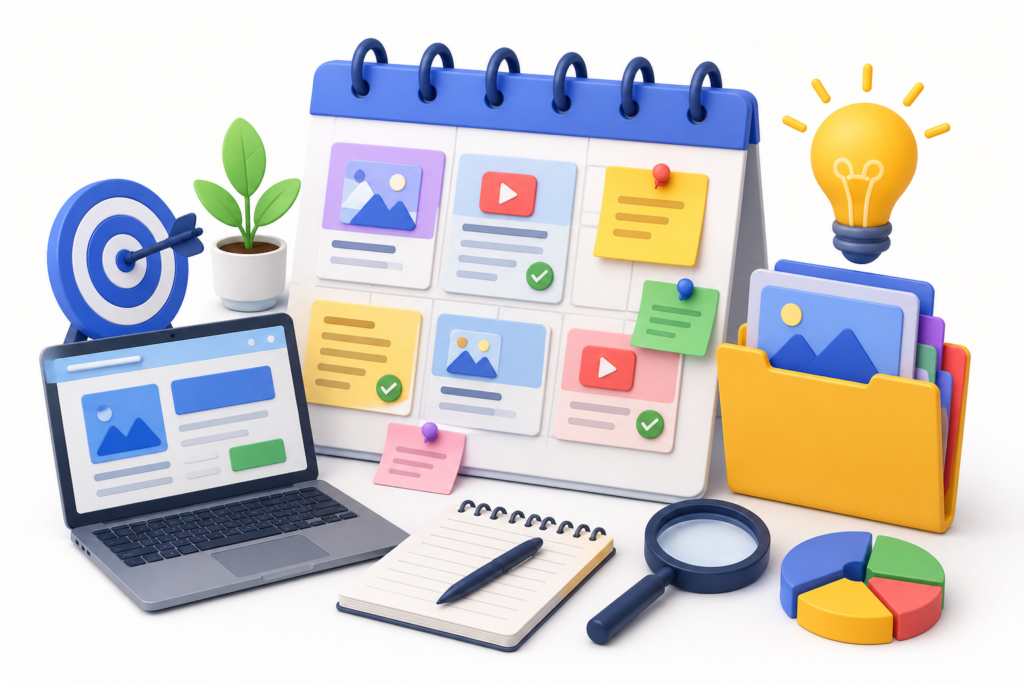
Building a Sustainable Content Strategy
Successful Infosites require long-term planning rather than random content publishing. A strategic editorial framework ensures consistency, relevance, and authority growth over time.
Content planning should begin with audience analysis. Businesses must understand:
- User pain points
- Search behavior
- Common industry questions
- Customer journey stages
- Competitive content gaps
This information helps create content that aligns with actual user needs rather than assumptions.
An editorial calendar also improves consistency. Publishing schedules help maintain freshness while ensuring comprehensive topic coverage.
Creating Evergreen Content
Evergreen content forms the foundation of high-performing Infosites. These are articles and resources that remain relevant for extended periods.
Examples include:
- Beginner guides
- Tutorials
- Best practices
- Industry fundamentals
- Process explanations
- Educational resources
Evergreen content generates ongoing organic traffic and strengthens authority over time. Periodic updates ensure accuracy and maintain search relevance.
Search engines prefer updated content that reflects current industry standards and evolving user expectations.
Balancing Educational and Commercial Goals
Although Infosites prioritize education, they should still support business objectives strategically. The key is maintaining a balance between informational value and conversion opportunities.
Calls-to-action should feel natural rather than intrusive. Educational content builds trust first, then guides users toward relevant services or next steps.
Content should prioritize user benefit above direct promotion. Websites that focus excessively on sales messaging often experience reduced engagement and weaker SEO performance.
Trust-building content consistently produces stronger long-term conversion quality than aggressive marketing tactics.
User Experience Design for Infosites
Why User Experience Directly Affects SEO
User experience has become deeply connected to SEO performance. Search engines increasingly evaluate behavioral signals such as engagement, dwell time, bounce rates, and usability.
Infosites that prioritize clean layouts, readability, and intuitive navigation create better experiences for visitors. Users stay longer, explore more pages, and interact more meaningfully with the content.
Modern UX design focuses on reducing friction. Every unnecessary obstacle can reduce engagement and conversion potential.
Good design improves both accessibility and trust, which are essential for long-term digital success.
Readability and Visual Hierarchy
Content readability is critical for Infosites because users visit primarily to consume information. Poor formatting can make even high-quality content difficult to engage with.
Effective readability includes:
- Short paragraphs
- Clear headings
- Logical spacing
- Bullet points
- Consistent typography
- Strategic emphasis formatting
Visual hierarchy helps users scan content quickly and locate relevant information efficiently. Important sections should stand out naturally without overwhelming the user.
Well-structured content improves comprehension and encourages deeper interaction.
Mobile-First Design Principles
Mobile traffic continues to dominate many industries, making responsive design essential. Infosites must function flawlessly across smartphones, tablets, and desktops.
Google recommends responsive web design as a best practice because it improves usability and simplifies indexing. Responsive Web Design Best Practices
Mobile optimization should include:
- Fast loading speeds
- Readable text sizes
- Touch-friendly navigation
- Optimized images
- Minimal intrusive popups
Users expect smooth mobile experiences. Poor mobile usability damages trust and negatively impacts rankings.
Technical SEO Foundations for Infosites
Optimizing Website Speed
Website speed is one of the most important technical factors affecting both SEO and user experience. Slow-loading pages frustrate users and increase abandonment rates.
Infosites often contain large amounts of content and media, making optimization essential. Key performance improvements include:
- Image compression
- Lazy loading
- Efficient caching
- Lightweight coding
- Optimized hosting
- Content delivery networks
Google’s Core Web Vitals framework measures loading performance, visual stability, and responsiveness.
Core Web Vitals
Strong Core Web Vitals contribute to better user satisfaction and improved search visibility.
Structured Data and Schema Markup
Schema markup helps search engines understand website content more effectively. Infosites benefit significantly from structured data because it enhances visibility in search results.
Common schema types include:
- FAQ schema
- Article schema
- Breadcrumb schema
- Organization schema
- Review schema
Structured data can improve click-through rates by generating rich snippets in search results.
Proper implementation requires accuracy and consistency to avoid indexing issues.
Crawlability and Indexation
Search engines must be able to crawl and index content efficiently. Technical issues such as broken links, duplicate pages, poor internal linking, and incorrect robots directives can harm visibility.
Infosites should maintain:
- XML sitemaps
- Clean URL structures
- Canonical tags
- Logical internal links
- Proper redirects
According to Google Search Central Documentation, crawl efficiency directly influences indexing quality and search performance. Google Search Central Documentation
Technical SEO creates the foundation that allows great content to perform effectively.
Content Authority and E-E-A-T Optimization
Understanding E-E-A-T Principles
Google’s E-E-A-T framework stands for Experience, Expertise, Authoritativeness, and Trustworthiness. These principles heavily influence how search engines evaluate content quality.
Infosites are ideally suited for demonstrating E-E-A-T because they emphasize educational depth and user value.
Content should reflect:
- Real-world knowledge
- Accurate information
- Expert insights
- Transparent authorship
- Credible references
- Reliable sources
The goal is not simply to rank but to build lasting user trust.
Demonstrating Expertise Through Content
Expertise becomes visible when content explains topics clearly, accurately, and comprehensively. Superficial articles often fail to establish credibility.
High-authority Infosites typically include:
- Detailed tutorials
- Industry insights
- Case examples
- Data-driven analysis
- Updated information
- Practical recommendations
Businesses should ensure content is factually accurate and aligned with current industry standards.
Adding meaningful depth improves both user satisfaction and search visibility.
Building Trust Signals Across the Website
Trustworthiness extends beyond content itself. Website design, security, transparency, and usability all contribute to credibility.
Important trust signals include:
- HTTPS security
- Clear contact information
- Privacy policies
- Accessible navigation
- Professional branding
- Reliable hosting
Google recommends secure browsing practices through HTTPS implementation. HTTPS Best Practices
Users are far more likely to trust websites that appear professional, transparent, and secure.
Conversion Optimization for Infosites
Why Conversion Optimization Matters
Many businesses assume Infosites are only designed for educational purposes, but the reality is far more strategic. A high-performing Infosite should educate users while also guiding them toward meaningful actions. These actions may include contacting the business, subscribing to newsletters, downloading resources, requesting consultations, or exploring service pages.
Conversion optimization is not about aggressive selling. Modern users are highly sensitive to intrusive marketing tactics. Instead, effective Infosites create a trust-first experience where users naturally progress toward engagement after receiving valuable information.
Strong conversion-focused Infosites combine:
- Helpful educational content
- Strategic calls-to-action
- Trust-building elements
- Clear navigation pathways
- Frictionless user journeys
When users feel informed and confident, they are significantly more likely to convert into qualified leads or long-term customers.
Designing Effective Calls-to-Action
Calls-to-action should feel relevant and contextually appropriate. Generic buttons such as “Click Here” or “Buy Now” are often ineffective on information-focused websites because they disrupt the educational experience.
Instead, CTAs should align with user intent. Examples include:
- Learn more about our process
- Request a personalized consultation
- Explore advanced strategies
- Download the complete guide
- Contact our specialists
Placement also matters. Effective Infosites typically position CTAs:
- After valuable informational sections
- Inside educational resource areas
- Within comparison content
- At logical decision-making points
The goal is to create smooth transitions rather than interruptive marketing experiences.
Improving Trust to Increase Conversions
Trust is one of the strongest conversion drivers for Infosites. Users are more likely to engage with websites that appear credible, transparent, and professional.
Important trust-building elements include:
- Secure HTTPS implementation
- Professional design consistency
- Clear business information
- Transparent policies
- Reliable content sources
- User-friendly layouts
According to Google Safe Browsing, website security and safe browsing practices significantly affect user confidence online. Google Safe Browsing
Trust-building should be integrated throughout the entire user experience rather than isolated to a single page.
Internal Linking Strategies for Infosites
Why Internal Linking Is Essential
Internal linking is one of the most powerful SEO strategies for Infosites because it helps search engines understand content relationships while guiding users toward relevant resources.
An effective internal linking strategy improves:
- Crawlability
- Indexation
- User engagement
- Page authority distribution
- Session duration
- Topic relevance
Without proper internal linking, even excellent content may struggle to perform because search engines cannot easily interpret how pages connect semantically.
Infosites benefit enormously from structured internal linking because they typically contain large volumes of educational content.
Creating Topic Relevance Through Links
Internal links should connect related content naturally and contextually. Random or excessive linking reduces clarity and may harm usability.
For example, an article about user experience design should logically link to pages discussing:
- Mobile responsiveness
- Accessibility
- Navigation optimization
- Website speed
- Conversion design
This interconnected structure strengthens topical authority while helping users continue their learning journey seamlessly.
Descriptive anchor text is also important. Search engines use anchor text to understand linked content relationships.
Avoiding Common Internal Linking Mistakes
One of the most common mistakes is overloading pages with excessive links. Too many internal links dilute authority signals and overwhelm users.
Other common problems include:
- Broken internal links
- Orphan pages
- Generic anchor text
- Irrelevant linking
- Deep page structures
Infosites should maintain a balanced linking structure that prioritizes user experience first.
A strong internal linking strategy ensures important pages remain accessible within a few clicks from the homepage. This improves both crawl efficiency and usability.
Website Security for Modern Infosites
Why Website Security Is Critical
Security is now a core component of SEO, user trust, and website performance. Modern users expect websites to protect their data and browsing experiences.
An unsecured website damages credibility immediately. Users may abandon pages if they encounter browser warnings or suspicious behavior indicators.
Infosites often collect user information through:
- Contact forms
- Newsletter signups
- Resource downloads
- Account registrations
Protecting this information is essential for maintaining trust and compliance with digital standards.
HTTPS and Secure Browsing
HTTPS encryption is no longer optional. Secure websites encrypt communication between the user and server, protecting sensitive information from interception.
Google officially confirmed HTTPS as a ranking signal years ago, and secure browsing remains an important trust factor today. Google HTTPS Security Guidelines
Infosites should also:
- Maintain updated SSL certificates
- Use secure hosting providers
- Monitor vulnerabilities regularly
- Update plugins and software consistently
Strong technical maintenance prevents security issues before they become major problems.
Protecting User Trust
Security directly affects brand perception. Users associate secure websites with professionalism and reliability.
Additional trust-enhancing security measures include:
- Privacy policy pages
- Cookie transparency
- Secure payment systems
- Spam prevention tools
- Regular backups
- Malware monitoring
Search engines increasingly prioritize trustworthy user experiences. Security failures can damage both rankings and reputation significantly.
Accessibility and Inclusive Design
Why Accessibility Matters
Accessibility ensures that websites can be used effectively by people with varying abilities, devices, and browsing conditions. Inclusive design is not only ethically important but also beneficial for SEO and user engagement.
Infosites should prioritize accessibility because educational content must remain usable for the widest possible audience.
Accessible websites improve:
- User satisfaction
- Engagement metrics
- Search visibility
- Brand reputation
- Legal compliance
Modern accessibility standards support both usability and long-term digital sustainability.
Key Accessibility Best Practices
Important accessibility strategies include:
- Proper heading hierarchy
- Keyboard navigation support
- Alt text for images
- Readable typography
- Strong contrast ratios
- Screen reader compatibility
The Web Content Accessibility Guidelines (WCAG) provide internationally recognized standards for improving accessibility. Web Content Accessibility Guidelines (WCAG)
Accessible design improves usability for all users, not only individuals with disabilities.
Accessibility and SEO Connection
Accessibility and SEO often overlap significantly. Clear structures, readable content, descriptive headings, and optimized navigation all improve both usability and search performance.
Search engines prefer websites that create positive user experiences. Poor accessibility can lead to higher bounce rates and reduced engagement.
Infosites designed with accessibility in mind tend to perform better across multiple devices and browsing environments.
Inclusive design should be treated as a long-term investment rather than a compliance checklist.
Mobile Optimization Strategies for Infosites
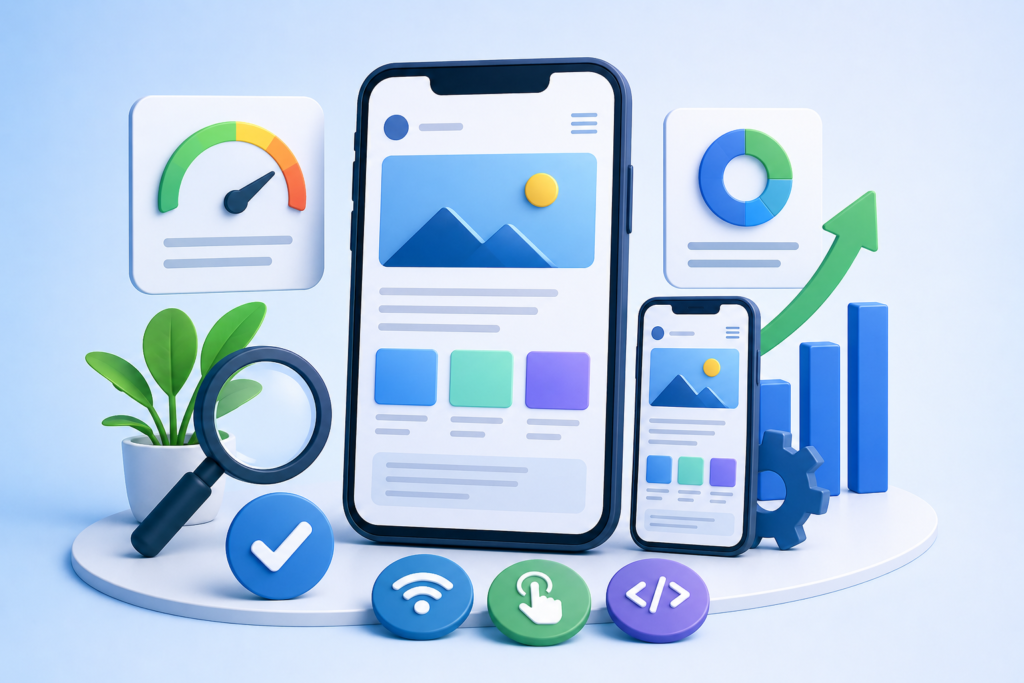
Mobile-First User Behavior
Most online users now browse primarily on mobile devices. This shift has transformed how Infosites must be designed and optimized.
Users expect:
- Fast loading
- Responsive layouts
- Easy scrolling
- Clear readability
- Touch-friendly navigation
Mobile usability directly affects rankings because search engines use mobile-first indexing.
An Infosite that performs poorly on mobile devices risks losing both traffic and user trust.
Optimizing Mobile Performance
Mobile optimization includes both technical and design considerations.
Important strategies include:
- Responsive layouts
- Compressed media
- Efficient code
- Minimal intrusive popups
- Streamlined navigation
- Optimized font scaling
According to Google Mobile-Friendly Best Practices, mobile usability is essential for maintaining strong search performance. Google Mobile-Friendly Best Practices
Every second of loading delay increases abandonment risk significantly.
Creating Better Mobile Reading Experiences
Infosites are content-heavy by nature, making mobile readability especially important.
Long paragraphs, cluttered layouts, and poor spacing reduce engagement on smaller screens.
Effective mobile content formatting includes:
- Short paragraphs
- Clear headings
- Scannable layouts
- Consistent spacing
- Readable typography
Users should never struggle to consume information comfortably on mobile devices.
Common Infosite Mistakes Businesses Must Avoid
Publishing Thin or Generic Content
One of the most damaging mistakes businesses make is publishing low-value content purely for search rankings. Thin content provides little educational value and often fails to satisfy user intent.
Modern search algorithms prioritize:
- Depth
- Originality
- Expertise
- Relevance
- Trustworthiness
Generic content frequently results in:
- Low engagement
- Weak rankings
- Reduced trust
- Poor backlink potential
Infosites should focus on meaningful insights rather than content volume alone.
Ignoring Technical SEO
Even excellent content can underperform if technical foundations are weak.
Common technical SEO issues include:
- Slow loading pages
- Broken links
- Duplicate content
- Poor indexing
- Missing metadata
- Weak internal linking
Technical audits should occur regularly to maintain optimal performance.
Businesses that ignore technical optimization often lose visibility despite producing quality content.
Overcomplicating User Experience
Some Infosites become overloaded with excessive animations, cluttered layouts, intrusive popups, and confusing navigation systems.
Complexity reduces usability and frustrates visitors.
Modern users prefer:
- Simplicity
- Clarity
- Fast access to information
- Clean visual design
- Logical navigation
User-centered design consistently outperforms visually overwhelming experiences.
Content Marketing Strategies for Infosites
Creating Shareable Educational Content
Infosites perform exceptionally well when content is genuinely valuable and share-worthy.
Educational resources often generate:
- Organic backlinks
- Social engagement
- Referral traffic
- Brand visibility
High-performing content types include:
- Industry guides
- Research-based articles
- Tutorials
- Checklists
- Data-driven insights
Quality matters significantly more than publishing frequency alone.
Leveraging Evergreen Content
Evergreen content provides long-term value because it remains relevant over extended periods.
Businesses should regularly update evergreen resources to:
- Maintain accuracy
- Improve rankings
- Expand insights
- Reflect industry changes
Evergreen strategies create sustainable traffic growth and stronger authority over time.
Infosites built around evergreen resources often outperform trend-focused content models long term.
Integrating Multimedia Content
Modern users engage with diverse content formats more effectively than text alone.
Infosites can improve engagement using:
- Infographics
- Videos
- Interactive tools
- Visual tutorials
- Comparison charts
Multimedia enhances learning experiences while improving dwell time and content retention.
However, media optimization is essential to avoid slowing website performance.
Future Trends Shaping Infosites in 2026 and Beyond
AI-Assisted Search Experiences
Artificial intelligence is transforming how users discover and consume information online. Search engines increasingly prioritize context, intent understanding, and answer quality.
Infosites must adapt by focusing on:
- Comprehensive expertise
- Original insights
- Human-first experiences
- Trustworthy content
AI-generated low-quality content saturation makes genuine expertise even more valuable.
Businesses that prioritize authenticity and usefulness will remain competitive.
Experience-Driven Website Design
Modern users expect experiences rather than static pages. Infosites are evolving into highly interactive educational platforms.
Future-focused features may include:
- Personalized recommendations
- Interactive learning systems
- Dynamic content adaptation
- AI-assisted navigation
- Voice-search optimization
User engagement metrics will likely become even more influential in search visibility.
Semantic SEO and Entity Optimization
Search engines increasingly understand topics semantically rather than relying solely on keywords.
Future SEO strategies will prioritize:
- Topic relationships
- Contextual relevance
- Content depth
- Structured information
Infosites naturally align with semantic SEO because they focus on comprehensive subject coverage.
Businesses investing in topic authority today are positioning themselves strongly for future search evolution.
FAQs
What is an Infosite?
An Infosite is a content-focused website designed primarily to educate users through structured, informative, and high-value resources while supporting SEO, trust-building, and conversions.
Why are Infosites important for SEO?
Infosites improve SEO by targeting informational search intent, building topical authority, increasing engagement, and supporting long-term organic traffic growth.
How long does it take for an Infosite to rank?
SEO growth timelines vary depending on competition, content quality, technical optimization, and authority. Many Infosites begin showing measurable improvements within several months, while stronger authority develops over longer periods.
Are Infosites better than traditional websites?
Infosites often outperform traditional brochure-style websites because they provide greater educational value, stronger SEO opportunities, and better long-term engagement.
What type of businesses benefit from Infosites?
Nearly all industries can benefit from Infosites, including:
- Professional services
- Healthcare
- Technology
- Finance
- Education
- E-commerce
- Marketing agencies
Any business seeking authority and organic visibility can gain value from this model.
How often should Infosite content be updated?
Important pages should be reviewed regularly to maintain accuracy, improve relevance, and align with changing industry standards and search expectations.
Do Infosites require ongoing SEO work?
Yes. Successful Infosites require continuous optimization, technical maintenance, content updates, and performance monitoring to remain competitive.
What makes an Infosite trustworthy?
Trustworthy Infosites demonstrate expertise, accurate information, secure browsing, transparent policies, professional design, and helpful user experiences.
Best Practices Summary
Focus on User Intent First
The most successful Infosites prioritize helping users solve problems, answer questions, and understand topics clearly.
Search visibility improves naturally when websites genuinely satisfy user intent.
Build Topical Authority Strategically
Businesses should create comprehensive content ecosystems rather than isolated articles.
Topic clusters, internal linking, and semantic relevance all strengthen authority signals.
Maintain Strong Technical Foundations
Technical SEO, website speed, mobile responsiveness, and security are essential for sustainable growth.
Great content alone cannot compensate for poor technical performance.
Prioritize Trust and Accessibility
Users engage more confidently with websites that feel transparent, secure, accessible, and professionally designed.
Trust-building should remain central to every aspect of Infosite development.
Conclusion
Infosites have become one of the most effective website models for businesses seeking long-term digital growth, authority, and sustainable organic visibility. As search engines continue prioritizing helpful, trustworthy, and experience-driven content, educational website strategies are becoming increasingly valuable across nearly every industry.
A successful Infosite combines strategic SEO, exceptional user experience, technical optimization, accessibility, trust-building, and authoritative content into one unified platform. Businesses that invest in high-quality informational experiences position themselves more effectively for long-term search success and stronger customer relationships.
At Monthly Website Design, businesses can build modern Infosites designed to improve visibility, strengthen credibility, enhance user engagement, and support future digital growth in an increasingly competitive online environment.
Want to Implement This Easily?
Prompt Text:
You are an expert consultant. Based on the blog post titled “Infosites”, provide a step-by-step, practical implementation guide. Include tools, best practices, common mistakes to avoid, and advanced tips. Assume the reader wants to implement everything discussed in this article effectively.
Call to Action:
Want our help implementing this? Just reach out to us via our website contact form:
Monthly Website Design Contact Form