

Discover everything you need to know about Infosites, including planning, design, SEO, user experience, security, content strategy, and performance optimization. Learn how to build an authoritative information website that attracts qualified visitors, improves search rankings, and creates long-term online success.
Introduction
In today’s digital landscape, an Infosite is far more than a collection of web pages. It serves as a trusted online knowledge hub where businesses, organizations, educational institutions, and industry experts provide valuable information that helps visitors make informed decisions. Unlike traditional promotional websites, an information-focused website emphasizes education, credibility, transparency, and long-term value. As search engines continue prioritizing helpful, authoritative content, professionally developed Infosites have become one of the most effective ways to build digital authority while attracting consistent organic traffic.
For organizations seeking sustainable online growth, creating an information-rich website is no longer optional—it’s a strategic investment. Search engines reward websites that demonstrate expertise, experience, authority, and trustworthiness (E-E-A-T). Visitors also expect accurate, up-to-date, and easy-to-understand information before they engage with a business. A well-designed Infosite bridges this gap by delivering reliable resources while guiding users naturally toward meaningful actions.
At Monthly Website Design, we understand that successful Infosites combine outstanding website design, intelligent information architecture, technical SEO, accessibility, and user-focused content. Rather than chasing short-term ranking tactics, modern information websites are built around long-term quality, performance, and trust. This guide explores every essential aspect of creating, managing, optimizing, and growing an Infosite that performs exceptionally well for both users and search engines.
What Is an Infosite and Why Does It Matter?
An Infosite is a website specifically designed to educate, inform, and provide valuable resources to its audience. Instead of focusing primarily on direct sales, these websites organize knowledge into structured categories that answer questions, solve problems, and establish expertise. Businesses use Infosites to explain services, publish industry insights, provide documentation, create knowledge bases, support customers, and improve online visibility. Educational organizations, healthcare providers, technology companies, financial institutions, and government agencies all benefit from information-driven websites that prioritize clarity and usefulness.
Modern search engines increasingly reward websites that genuinely help users. Google’s emphasis on helpful content means websites offering comprehensive, accurate, and trustworthy information often outperform those relying on aggressive marketing language. Following Google Helpful Content Guidelines ensures your website focuses on user needs instead of search engine manipulation. This user-first philosophy creates stronger engagement, longer session durations, and improved conversion opportunities because visitors develop confidence in the information provided.
An effective Infosite also supports multiple business objectives simultaneously. It strengthens brand authority, improves customer education, reduces support requests, enhances SEO performance, generates qualified leads, and builds long-term relationships with visitors. When every page answers genuine questions and provides actionable guidance, the website becomes an authoritative resource rather than simply another online brochure. This sustainable approach benefits businesses far beyond immediate rankings by creating lasting trust and credibility within their industry.
Planning an Effective Infosite Strategy Before Development
Every successful Infosite begins with strategic planning rather than visual design. Organizations often rush into website development without defining their audience, objectives, content structure, or long-term growth plan. This frequently results in confusing navigation, duplicated content, inconsistent messaging, and poor search performance. Careful planning establishes the foundation for a scalable website capable of supporting future expansion while maintaining excellent usability.
Audience research should always be the starting point. Understanding user intent enables website owners to organize content around real questions instead of assumptions. Different audiences require different levels of technical detail, terminology, and navigation. Beginners may seek introductory explanations, while experienced professionals expect advanced resources. Developing audience personas helps prioritize information that genuinely meets visitor expectations and supports meaningful engagement throughout the customer journey.
Content architecture is equally important. Information should be organized into logical categories with intuitive navigation and clear internal relationships. This improves both user experience and search engine crawling. A structured hierarchy allows visitors to move naturally between related topics while helping search engines understand website relevance. Planning content clusters around primary themes creates stronger topical authority and supports long-term organic growth without relying on outdated SEO techniques.
Creating User-Centred Content That Builds Trust and Authority
Content remains the foundation of every successful Infosite. Visitors arrive seeking answers, explanations, comparisons, tutorials, and practical guidance. If the information lacks depth, accuracy, or clarity, they quickly lose confidence and search elsewhere. High-quality content addresses user needs comprehensively while remaining easy to understand, regardless of subject complexity. Every article should educate first and promote second.
Building trust requires demonstrating genuine expertise through evidence-based writing, practical examples, and transparent communication. Rather than making exaggerated claims, authoritative websites explain concepts thoroughly, acknowledge limitations where appropriate, and support recommendations with credible industry guidance. Google’s emphasis on E-E-A-T encourages publishers to showcase real experience, expert knowledge, and trustworthy information that benefits readers over the long term.
Consistency is another essential factor. A successful Infosite maintains a unified editorial style, logical formatting, accurate terminology, and regular content updates. Outdated information damages credibility and may negatively affect user trust. Establishing editorial guidelines ensures every contributor follows the same quality standards while maintaining clarity, professionalism, and factual accuracy. Regular content reviews also keep information aligned with evolving industry standards, user expectations, and technological developments.
Website Architecture and Information Organization
The structure of an Infosite directly influences usability, accessibility, and search engine performance. Even exceptional content becomes difficult to use when navigation is confusing or information is poorly categorized. A logical website architecture enables visitors to locate relevant resources quickly while helping search engines understand relationships between pages. Effective organization reduces frustration and encourages deeper engagement across multiple sections of the website.
Information hierarchy should begin with broad categories before progressing toward increasingly specific topics. Clear navigation menus, descriptive page titles, breadcrumb navigation, and contextual internal links help users maintain orientation throughout their journey. This layered approach improves discoverability while supporting efficient website maintenance as additional content is published over time. Scalability should always be considered during the planning stage rather than added later.
Internal linking further strengthens both usability and SEO. Related pages should naturally reference one another where relevant, enabling visitors to explore associated topics without unnecessary searching. This creates meaningful content clusters that reinforce topical authority and encourage longer browsing sessions. Well-planned internal linking also distributes page authority throughout the website, improving indexation and helping important resources gain greater visibility within search results.
Design Principles That Improve User Experience
An attractive website alone does not guarantee success. Effective Infosites prioritize usability, accessibility, readability, and intuitive interaction. Every design decision should support the visitor’s ability to locate, understand, and engage with information efficiently. Clean layouts, consistent typography, generous spacing, and logical visual hierarchy all contribute to a positive user experience that encourages longer visits and greater trust.
Responsive design has become essential because users access information from desktops, laptops, tablets, and smartphones throughout the day. Pages must automatically adapt to different screen sizes while preserving readability and navigation. Google’s mobile-first indexing reinforces the importance of responsive development, making mobile usability a critical ranking consideration. Following Responsive Web Design Basics helps developers create websites that perform consistently across diverse devices and platforms.
Accessibility should never be treated as an optional enhancement. Inclusive design benefits users with visual, auditory, cognitive, and physical impairments while improving overall usability for everyone. Features such as descriptive headings, alternative image text, keyboard navigation, sufficient colour contrast, and semantic HTML contribute to broader accessibility compliance. Designing with accessibility in mind demonstrates social responsibility while expanding the potential audience for your information resources.
Technical SEO Foundations for Long-Term Organic Growth
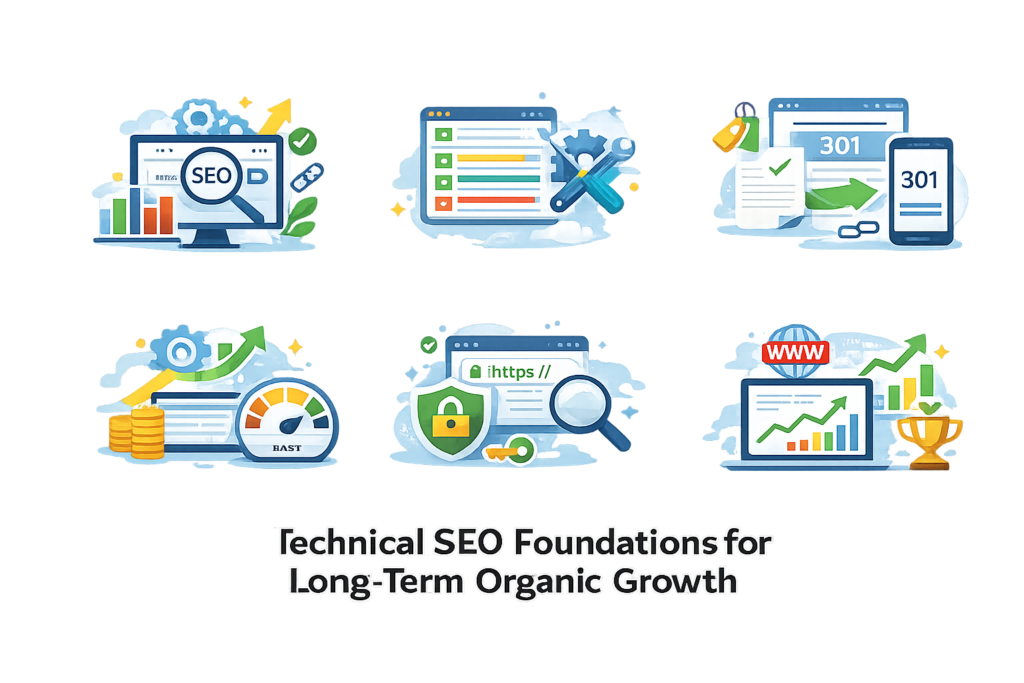
Technical SEO ensures search engines can efficiently discover, crawl, understand, and index website content. Even exceptional articles may struggle to rank if underlying technical issues prevent effective indexing or reduce website performance. A technically optimized Infosite provides a stable foundation that supports every other SEO initiative, from content creation to link building and user engagement.
Website speed remains one of the most influential technical considerations. Slow-loading pages increase bounce rates, reduce user satisfaction, and negatively affect search performance. Optimizing images, implementing caching, minimizing unnecessary scripts, compressing files, and improving server response times all contribute to faster loading experiences. Monitoring PageSpeed Insights allows website owners to identify performance opportunities while measuring improvements over time.
Core Web Vitals also play an important role in evaluating real-world user experience. Metrics including loading performance, visual stability, and interaction responsiveness provide measurable indicators of website quality. Google’s guidance on Core Web Vitals helps developers optimize websites for practical usability rather than simply achieving technical benchmarks. Combining strong technical SEO with valuable content creates a powerful foundation for sustainable organic growth.
Keyword Research and Content Planning for Infosites
Successful keyword research extends far beyond identifying high-volume search terms. Modern SEO focuses on understanding user intent, topical relevance, semantic relationships, and the complete customer journey. An Infosite should answer both broad educational questions and highly specific informational queries, enabling visitors to progress naturally through increasingly detailed resources while establishing the website as a comprehensive authority within its niche.
Primary keywords define the central topic of each page, while secondary and LSI (Latent Semantic Indexing) keywords enrich contextual relevance. Rather than repeating the same phrase excessively, effective content incorporates related terminology naturally throughout headings, paragraphs, image descriptions, and internal links. This improves readability while helping search engines understand the broader subject matter without resorting to outdated keyword stuffing practices.
Comprehensive keyword research should combine multiple trusted resources. Google Keyword Planner provides valuable search demand insights, while Google Search Console reveals real search queries already generating impressions and traffic. By analysing user behaviour alongside search trends, website owners can develop content calendars that consistently address emerging questions, strengthen topical authority, and maintain long-term visibility across competitive search results.
Content Management and Continuous Improvement for Long-Term Success
An Infosite is never truly finished. Unlike a static brochure website that may remain unchanged for extended periods, an information-focused website requires continuous updates, refinements, and quality improvements to remain relevant. Search engines favour websites that demonstrate freshness where appropriate, while users naturally expect accurate, up-to-date information. A content management strategy ensures that every page continues to provide value as technologies, regulations, industry standards, and customer expectations evolve.
Creating a structured editorial calendar is one of the most effective ways to maintain consistency. Rather than publishing content randomly, organizations should plan articles around user needs, seasonal trends, emerging industry topics, and frequently asked questions. Existing articles should also be reviewed regularly to identify outdated statistics, broken links, obsolete recommendations, or missing information. Refreshing high-performing content often produces stronger SEO results than continually publishing new pages because search engines recognize improvements to already established resources.
Effective content governance also involves maintaining editorial quality standards across the website. Every article should follow a consistent writing style, logical heading structure, accurate grammar, and clear formatting. Images, videos, downloadable resources, and interactive elements should all support the educational purpose of the page. By treating content as a long-term business asset rather than a one-time marketing activity, organizations can steadily strengthen their authority while improving user satisfaction and search visibility over time.
Website Security, Privacy, and Data Protection
Trust is one of the most valuable assets an Infosite can build, and website security plays a central role in maintaining that trust. Visitors expect websites to protect their personal information, provide secure browsing experiences, and safeguard any data submitted through contact forms or user accounts. Security failures not only damage credibility but can also negatively affect search visibility, customer confidence, and legal compliance.
Implementing HTTPS is a fundamental security requirement. An SSL certificate encrypts data transferred between the user’s browser and the web server, protecting sensitive information from interception. Google has consistently recommended HTTPS as a standard for secure websites. Learn more through Google HTTPS Documentation. Secure websites reassure visitors while supporting better search performance and compliance with modern browser security expectations.
Website security extends beyond encryption. Organizations should keep content management systems, plugins, themes, and server software fully updated to minimize vulnerabilities. Regular backups, malware scanning, web application firewalls, secure authentication methods, and role-based user permissions further reduce security risks. Privacy policies should clearly explain how visitor information is collected, stored, and processed, ensuring transparency while supporting compliance with regulations such as the UK GDPR.
Measuring Infosite Performance with Data and Analytics
Building an Infosite without measuring performance is like navigating without a map. Analytics provide valuable insights into user behaviour, helping organizations understand which content performs well, where visitors encounter difficulties, and how website improvements influence business outcomes. Decisions supported by reliable data consistently outperform assumptions.
Traffic volume alone does not determine success. More meaningful metrics include user engagement, average session duration, scroll depth, return visitor rates, organic search visibility, content interactions, and conversion performance. These indicators reveal whether visitors genuinely find the information valuable or leave quickly without engaging. Monitoring behavioural patterns helps identify opportunities to improve navigation, update content, and strengthen calls to action while preserving a user-first experience.
Several trusted tools support performance analysis. Google Analytics 4 provides detailed visitor insights, while Google Search Console helps monitor indexing, search performance, and technical issues. Developers can also evaluate loading performance using PageSpeed Insights and review accessibility improvements through Google Lighthouse. Combining these resources enables continuous optimization based on measurable evidence rather than guesswork.
Common Challenges When Building an Infosite and How to Overcome Them
Although Infosites offer tremendous long-term value, many organizations encounter predictable challenges during development and maintenance. One of the most common issues is attempting to publish excessive amounts of content without establishing a clear structure. Large volumes of poorly organized information overwhelm users, create duplicate topics, and reduce overall website quality. Starting with a carefully planned information architecture prevents confusion while supporting future growth.
Another frequent challenge involves balancing technical accuracy with readability. Industry experts often write for colleagues rather than general audiences, making content unnecessarily complex. Effective Infosites explain sophisticated concepts using straightforward language without sacrificing accuracy. Clear examples, diagrams, practical recommendations, and logical progression help readers understand even highly technical subjects while maintaining professional credibility.
Resource limitations can also affect long-term content quality. Organizations sometimes launch ambitious websites but fail to allocate sufficient time for updates, maintenance, or editorial review. Establishing realistic publishing schedules, assigning content ownership, and conducting periodic audits help ensure information remains accurate and useful. Sustainable quality consistently delivers stronger results than rapid expansion followed by neglect.
Future Trends Shaping Modern Infosites
The evolution of search technology continues transforming how information websites are designed, managed, and discovered. Artificial intelligence is improving search understanding, allowing engines to evaluate content quality, relevance, and context more effectively than ever before. This shift rewards websites that genuinely help users while reducing the effectiveness of outdated optimization techniques focused solely on keywords.
Personalization is becoming increasingly important. Visitors expect websites to recommend related content, adapt to user behaviour, and provide more relevant information based on browsing patterns. Intelligent search functions, dynamic navigation, interactive calculators, comparison tools, and customized learning pathways create richer user experiences while encouraging longer engagement and repeat visits.
Voice search, visual search, and AI-assisted search experiences are also influencing content strategy. Information should be organized around natural language questions, concise explanations, and structured data that helps search engines interpret page content accurately. Implementing Schema.org structured data and following Google Structured Data Guidelines enables search engines to better understand website content while supporting enhanced search result features.
Choosing the Right Development Partner for Your Infosite
Selecting the right development partner significantly influences the long-term success of an Infosite. Technical expertise alone is insufficient. An effective partner should understand user experience, accessibility, search optimization, security, content strategy, scalability, and business objectives. The goal is to create an information platform that continues delivering value for many years rather than simply launching an attractive website.
Before beginning any project, organizations should evaluate previous work, development processes, communication standards, ongoing support options, and technical capabilities. A transparent partner explains recommendations clearly, provides realistic timelines, and focuses on sustainable quality rather than unrealistic promises. They should prioritize long-term maintainability, ensuring future updates remain straightforward without requiring complete redevelopment.
Successful collaboration depends upon shared objectives. Businesses should define target audiences, desired outcomes, content priorities, branding requirements, and performance expectations before development begins. Regular communication throughout the project ensures technical implementation remains aligned with organizational goals while reducing misunderstandings and costly revisions later.
Building an Infosite That Delivers Long-Term Business Value
A successful Infosite is much more than an online collection of articles. It becomes a trusted digital knowledge centre that supports customers, educates audiences, strengthens search visibility, and establishes lasting authority within its industry. Every aspect—from planning and design to technical optimization, accessibility, security, and content management—contributes to the overall user experience and long-term performance.
Organizations that consistently invest in helpful, accurate, and trustworthy information position themselves as industry leaders rather than simply competitors. Visitors return to websites they trust, recommend valuable resources to others, and increasingly view authoritative content as a reflection of business credibility. These relationships create sustainable growth that extends well beyond immediate marketing campaigns.
At Monthly Website Design, we believe that the most successful Infosites combine exceptional user experience, technical excellence, valuable content, and continuous improvement. By following modern SEO best practices, maintaining high editorial standards, and prioritizing visitor needs above short-term ranking tactics, businesses can build information websites that remain valuable assets for many years while supporting measurable digital growth.
Common Mistakes to Avoid When Creating an Infosite
Many organizations unintentionally reduce the effectiveness of their Infosites by making avoidable mistakes during planning, development, or maintenance. Some of the most common include:
- Publishing thin or low-value content that lacks practical insights.
- Focusing on search engines instead of user needs.
- Poor navigation and confusing information architecture.
- Ignoring mobile responsiveness and accessibility.
- Allowing outdated information to remain published.
- Using duplicate or repetitive content across multiple pages.
- Neglecting technical SEO and website performance.
- Failing to implement HTTPS and essential security measures.
- Not measuring user engagement or search performance.
- Publishing inconsistent content without editorial standards.
Avoiding these mistakes significantly improves user satisfaction, search visibility, and long-term credibility.
Best Practices Summary
For maximum long-term success, every Infosite should:
- Prioritize user-first content.
- Follow Google E-E-A-T principles.
- Maintain logical website architecture.
- Publish comprehensive, accurate resources.
- Optimize loading speed and Core Web Vitals.
- Ensure mobile responsiveness.
- Implement accessibility best practices.
- Use structured internal linking.
- Monitor website performance continuously.
- Update content regularly.
- Protect user data with strong security.
- Measure success using trusted analytics tools.
- Build authority through expertise rather than manipulation.
Frequently Asked Questions
1. What is an Infosite?
An Infosite is an information-focused website designed to educate visitors through structured, high-quality content rather than primarily selling products or services. It builds authority by answering questions and providing valuable resources.
2. Why are Infosites important for SEO?
Infosites naturally attract organic traffic because they answer user questions comprehensively. High-quality informational content helps establish topical authority, improve search rankings, and increase user trust.
3. How often should an Infosite be updated?
Regular reviews every three to six months are recommended, with immediate updates whenever important industry changes, regulations, statistics, or best practices evolve.
4. What makes an Infosite trustworthy?
Trustworthy Infosites provide accurate information, cite authoritative sources, maintain secure browsing, update content regularly, and demonstrate expertise through practical, experience-based guidance.
5. Does website speed affect an Infosite?
Yes. Faster websites improve user experience, reduce bounce rates, and support better search visibility. Performance optimization should always remain an ongoing priority.
6. Can an Infosite generate business leads?
Absolutely. By educating visitors first, Infosites establish credibility and naturally encourage users to request consultations, submit enquiries, subscribe to newsletters, or explore additional services.
7. What role does internal linking play?
Internal linking connects related topics, improves navigation, distributes authority across pages, and helps search engines understand content relationships throughout the website.
8. How do Google E-E-A-T principles improve an Infosite?
Experience, Expertise, Authoritativeness, and Trustworthiness help ensure content genuinely benefits users. Websites demonstrating these qualities typically perform better in competitive search environments because they prioritize quality over manipulation.
Conclusion
An effective Infosite is much more than an online collection of information—it is a strategic digital asset that educates visitors, builds credibility, strengthens brand authority, and supports sustainable business growth. By combining well-researched content, intuitive website architecture, responsive design, technical SEO, robust security, accessibility, and ongoing content management, organizations can create an information resource that delivers lasting value to both users and search engines. Rather than focusing on short-term ranking tactics, successful Infosites prioritize helpful, accurate, and trustworthy content that genuinely solves problems and answers real questions.
As search engines continue evolving, websites that demonstrate Experience, Expertise, Authoritativeness, and Trustworthiness (E-E-A-T) will remain well-positioned for long-term success. Regularly updating content, monitoring performance, improving user experience, and following industry best practices ensure your website remains competitive in an increasingly demanding digital landscape. Every improvement—whether technical, editorial, or design-related—contributes to a better experience for your audience while strengthening your online presence.
At Monthly Website Design, we specialize in creating high-quality, future-ready Infosites that combine exceptional design, modern development standards, advanced SEO strategies, and user-focused content. Whether you are building a new information website or improving an existing one, investing in quality, performance, and long-term value will help establish your business as a trusted authority in your industry. A professionally developed Infosite is not simply a website—it is a long-term investment in your digital reputation, organic visibility, and sustainable business success.
Want to Implement This Easily?
Prompt
You are an expert consultant. Based on the blog post titled “Infosites”, provide a step-by-step, practical implementation guide. Include tools, best practices, common mistakes to avoid, and advanced tips. Assume the reader wants to implement everything discussed in this article effectively.
Call to Action
Want our help implementing this? Just reach out to us via our website contact form: https://monthlywebsitedesign.co.uk/contact-us/