

Discover how Infosites improve SEO visibility, brand authority, customer trust, and long-term online growth. Learn advanced strategies, content structures, optimization techniques, and best practices for building high-performing informational websites.
Introduction
In today’s digital-first marketplace, businesses that provide valuable information consistently outperform competitors that rely only on direct sales messaging. An Infosite is more than a standard website—it is a strategic platform designed to educate, inform, build trust, and position a brand as a recognized authority within its industry. Informational websites have become essential for companies seeking long-term organic visibility, sustainable traffic, and stronger customer relationships.
Businesses across industries are increasingly investing in structured informational content because modern users want answers before making purchasing decisions. Whether someone is researching a product, comparing services, solving a problem, or learning a new skill, they typically begin with search engines. According to Google Search Essentials from Google Search Central, websites that deliver helpful, people-first content are far more likely to perform well in organic search rankings.
At Monthly Website Design, businesses recognize that an effective Infosite combines user experience, technical SEO, authority-building content, and scalable architecture into a single digital ecosystem. Instead of functioning as a static online brochure, an Infosite becomes an evolving resource hub that continuously attracts, educates, and converts visitors over time.
What Is an Infosite and Why Does It Matter?
An Infosite is a website primarily focused on delivering educational, informational, or knowledge-based content to a target audience. Unlike promotional landing pages that emphasize immediate sales, Infosites aim to establish trust and expertise by answering questions, solving problems, and guiding users through complex topics. These sites often include blogs, guides, tutorials, resource centers, FAQs, case studies, and industry insights.
Modern search engines prioritize websites that demonstrate topical authority and genuine usefulness. According to Helpful Content System guidelines from Google Search Central Blog, websites should focus on helping users rather than manipulating rankings. Infosites naturally align with these standards because they emphasize comprehensive, high-value information that supports user intent.
A well-structured Infosite also strengthens long-term marketing performance. Instead of relying entirely on paid advertising campaigns, businesses can generate recurring organic traffic through evergreen content. Over time, high-quality informational pages accumulate backlinks, social shares, and search visibility, making the website increasingly valuable as a business asset. This long-term sustainability is one of the primary reasons Infosites continue gaining importance across competitive industries.
The Difference Between Infosites and Traditional Business Websites
Traditional business websites often focus heavily on showcasing products, displaying company information, and encouraging direct conversions. While these elements remain important, they do not always satisfy users who are still researching or exploring solutions. Infosites address this gap by prioritizing education and discovery during the customer journey.
An Infosite typically contains a larger content ecosystem organized around topics, categories, and search intent. Rather than a few static pages, informational websites continuously expand through blogs, guides, tutorials, industry updates, and resource hubs. This structure improves topical relevance and allows businesses to target a broader range of search queries.
Another major distinction is how users interact with the website. Visitors on traditional sites may only browse briefly before leaving, especially if they are not ready to buy. On an Infosite, users spend more time engaging with educational material, internal resources, and related topics. This increased engagement can improve behavioral signals such as session duration and page depth, which contribute to stronger website performance overall. In addition, informational websites create multiple entry points into the customer journey, allowing businesses to capture users at various awareness stages.
How Infosites Improve Search Engine Visibility
One of the greatest advantages of an Infosite is its ability to support long-term search engine optimization strategies. Search engines reward websites that consistently publish high-quality, relevant, and user-focused content. An Infosite creates numerous opportunities to rank for informational, commercial, and long-tail keywords across multiple topic categories.
When structured properly, informational content helps search engines understand the expertise and relevance of a website. Google’s guidance on creating helpful, reliable, people-first content from Google Search Central Documentation emphasizes the importance of originality, usefulness, and topic depth. Infosites naturally support these goals through detailed educational resources.
Another important SEO advantage comes from internal linking. Informational websites typically contain interconnected pages that guide users between related topics. This structure distributes authority across the site, improves crawlability, and helps search engines understand content relationships. Businesses that invest in strong topical clusters often see significant improvements in keyword rankings, organic traffic growth, and overall search visibility over time.
The Role of User Intent in Infosite Strategy
Successful Infosites are built around user intent rather than simple keyword placement. User intent refers to the reason behind a search query—whether users want information, comparisons, tutorials, reviews, or solutions. Understanding this intent is critical for creating content that satisfies both users and search engines.
There are several common intent categories that Infosites should address. Informational intent includes searches where users seek knowledge or answers. Navigational intent focuses on finding a specific website or resource. Commercial intent involves comparing products or researching services before making a purchase decision. Transactional intent occurs when users are ready to convert or buy.
By mapping content to these intent stages, businesses can create a more effective user journey. Educational articles attract early-stage visitors, comparison pages support evaluation, and service pages encourage conversions. This layered approach increases engagement while improving the likelihood of turning informational traffic into paying customers. Websites that align content with genuine search intent typically achieve stronger rankings because they provide exactly what users are looking for.
Building Topical Authority Through Content Clusters
Topical authority has become one of the most influential factors in modern SEO performance. Search engines increasingly evaluate whether a website demonstrates deep expertise across a subject area rather than simply targeting isolated keywords. Infosites are ideal for building this type of authority because they support extensive content ecosystems organized around central themes.
A content cluster strategy begins with a primary pillar page that covers a broad topic comprehensively. Supporting articles then explore related subtopics in greater detail while linking back to the main pillar page. This interconnected structure helps users navigate information logically while signaling subject relevance to search engines.
For example, an Infosite about digital marketing might include a central pillar on SEO fundamentals alongside supporting content about keyword research, technical optimization, link building, local SEO, and analytics. This comprehensive approach strengthens thematic relevance while increasing opportunities to rank for related searches. Businesses that consistently expand topic clusters often experience improved domain authority, stronger organic visibility, and better long-term ranking stability.
Why Content Quality Matters More Than Content Volume
Many businesses mistakenly believe that publishing large quantities of content automatically improves rankings. In reality, search engines prioritize usefulness, originality, and expertise over sheer volume. Thin or repetitive articles can damage trust and reduce overall website quality signals.
High-quality informational content demonstrates genuine understanding, practical insights, and accurate information. According to Google’s quality guidelines from Google Search Central Documentation, websites should focus on satisfying users rather than producing content solely for search engines. Infosites that prioritize depth and value are more likely to attract backlinks, shares, and long-term engagement.
Quality content also supports brand reputation. Visitors are more likely to trust businesses that provide detailed explanations, transparent advice, and actionable recommendations. Over time, this trust strengthens customer relationships and encourages repeat visits. Instead of publishing dozens of low-value articles, businesses should focus on creating comprehensive resources that genuinely help users solve problems or make informed decisions.
Essential Features Every Successful Infosite Needs
An effective Infosite requires more than just written content. The overall structure, design, and functionality significantly influence user experience and SEO performance. One essential feature is intuitive navigation that helps users quickly find relevant information without confusion.
Another critical component is mobile responsiveness. With mobile traffic dominating many industries, websites must perform seamlessly across smartphones, tablets, and desktop devices. Google’s mobile-first indexing guidance from Google Search Central Documentation highlights the importance of mobile usability for rankings and visibility.
Additional important features include fast loading speeds, clear typography, logical content hierarchy, search functionality, optimized metadata, secure HTTPS protocols, and structured internal linking. Multimedia integration such as videos, infographics, charts, and downloadable resources can also improve engagement and content retention. Together, these features create a professional user experience that supports both trust and search engine performance.
The Importance of Technical SEO for Infosites
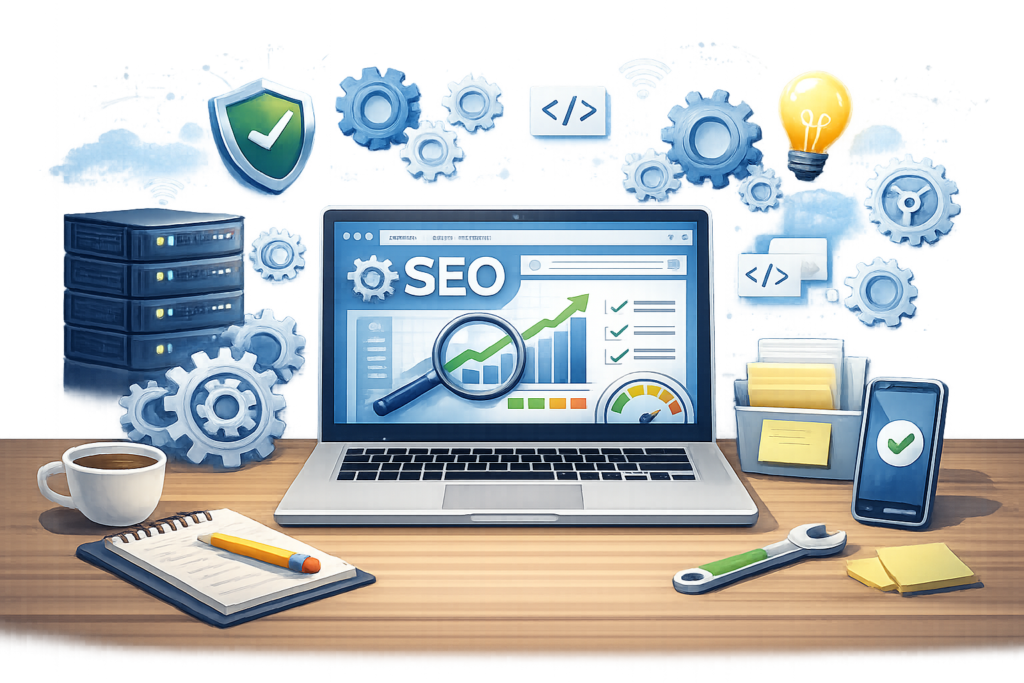
Even the best content may struggle to rank if technical SEO issues prevent search engines from properly crawling and indexing the site. Technical optimization forms the foundation of every successful Infosite by ensuring accessibility, usability, and performance.
Key technical SEO elements include XML sitemaps, clean URL structures, canonical tags, schema markup, optimized robots.txt files, and secure HTTPS implementation. Site speed optimization is particularly important because slow-loading pages can negatively affect user experience and rankings. Google’s Core Web Vitals standards from Google for Developers emphasize metrics related to loading performance, interactivity, and visual stability.
Structured data markup is another powerful tool for Infosites. Schema helps search engines understand content types and can improve eligibility for enhanced search features such as FAQs, rich snippets, and featured results. Businesses that invest in technical SEO create stronger foundations for long-term organic growth and improved search visibility.
How Infosites Build Trust and Brand Authority
Trust is one of the most valuable assets any business can develop online. Informational websites strengthen trust by consistently delivering accurate, useful, and transparent content that helps users make informed decisions.
When visitors repeatedly find reliable answers on a website, they begin to associate the brand with expertise and credibility. This trust often influences future purchasing decisions, referrals, and customer loyalty. Informational content also positions businesses as educators rather than aggressive marketers, creating a more positive relationship with audiences.
Authority-building content can include industry research, expert insights, tutorials, case studies, detailed guides, and practical solutions to common challenges. Including credible references and citing authoritative sources further enhances trustworthiness. Over time, a well-maintained Infosite becomes recognized as a valuable resource within its niche, increasing both online visibility and brand reputation.
The Connection Between Infosites and Long-Term Traffic Growth
Unlike short-term advertising campaigns that stop generating results once budgets expire, Infosites can produce sustainable traffic growth for years. Evergreen informational content continues attracting visitors long after publication, especially when updated regularly and optimized effectively.
Search engines reward freshness and relevance, but they also value content stability and authority. Articles that consistently receive engagement, backlinks, and positive user signals often maintain strong rankings over extended periods. This means a single high-quality article can continue driving leads and visibility long after it is created.
Infosites also benefit from cumulative growth. As more content is added and interconnected through internal linking, the website becomes increasingly authoritative. This broader topical coverage improves the ability to rank for additional keywords and related searches. Businesses that commit to long-term content strategies frequently achieve exponential traffic growth over time.
Content Planning Strategies for Infosites
Strategic planning is essential for maintaining consistency and ensuring that an Infosite addresses relevant audience needs. Effective content planning begins with comprehensive keyword research focused on search intent, topical relevance, and user questions.
Businesses should organize topics into content categories that align with their expertise and audience interests. Editorial calendars help maintain publishing consistency while preventing content gaps or duplication. Incorporating seasonal trends, industry updates, and emerging topics can also improve relevance and engagement.
Content planning should balance evergreen resources with timely updates. Evergreen guides provide long-term value, while news-oriented or trend-based articles help maintain freshness. Successful Infosites also prioritize content updates, revisiting older pages to improve accuracy, expand depth, and align with evolving SEO standards. This ongoing optimization process helps maintain rankings and ensures that information remains valuable to users.
Why Internal Linking Is Critical for Infosites
Internal linking is one of the most overlooked yet powerful optimization strategies for informational websites. Effective internal links guide users toward related resources, improve navigation, and distribute authority throughout the website.
From an SEO perspective, internal links help search engines discover and understand relationships between pages. When multiple articles connect around a shared topic, search engines gain stronger contextual signals regarding the website’s expertise. This structure supports topical authority and improves crawl efficiency.
Internal linking also enhances user experience by encouraging deeper engagement. Visitors who discover related resources are more likely to remain on the website longer and explore additional content. Strategic anchor text improves clarity while helping users navigate naturally between topics. Infosites with strong internal linking frameworks typically experience better engagement metrics and stronger overall SEO performance.
The Role of UX Design in Infosite Performance
User experience design plays a central role in determining whether visitors stay engaged or leave quickly. Even highly informative content can underperform if the website feels cluttered, confusing, or difficult to navigate.
Effective Infosite design emphasizes readability, accessibility, and intuitive structure. Clear headings, whitespace, responsive layouts, and logical navigation all contribute to a better user experience. Accessibility considerations such as readable fonts, alt text, keyboard navigation, and color contrast are also essential for inclusivity and compliance.
User experience directly influences SEO because search engines monitor behavioral signals such as bounce rates, dwell time, and interaction patterns. Websites that provide smooth, engaging experiences often achieve better rankings and higher conversion potential. Businesses that prioritize UX alongside content quality create stronger foundations for long-term online success.
How Infosites Support Lead Generation
Although Infosites focus heavily on education rather than direct selling, they can still become powerful lead-generation assets. Informational content attracts users during the research phase, allowing businesses to build trust before presenting conversion opportunities.
Lead generation strategies for Infosites often include downloadable resources, newsletters, webinars, free tools, consultation forms, and gated premium content. These offers provide additional value while encouraging visitors to engage more deeply with the business.
Educational content also improves conversion quality. Users who spend time learning from a brand are often more informed, engaged, and confident when making purchasing decisions. This means leads generated through Infosites may convert at higher rates compared to cold advertising traffic. Businesses that balance helpful information with strategic conversion pathways can create sustainable lead-generation systems that support long-term growth.
Measuring the Success of an Infosite
Tracking performance is essential for understanding how effectively an Infosite supports business goals. Key metrics often include organic traffic growth, keyword rankings, bounce rates, session duration, page views, backlink acquisition, and conversion rates.
Analytics platforms such as Google Analytics and Google Search Console provide valuable insights into user behavior and search performance. Businesses can identify which topics generate the most engagement, which pages attract backlinks, and where users exit the website.
Performance measurement should also include qualitative evaluation. User feedback, engagement patterns, and customer interactions help determine whether content genuinely satisfies audience needs. Successful Infosites continuously refine strategies based on data insights, search trends, and evolving user expectations.
Advanced Content Strategies for High-Performing Infosites
As search engines continue evolving, modern Infosites must go beyond basic blogging strategies. High-performing informational websites now rely on advanced content frameworks that combine topical authority, semantic relevance, and audience-focused experiences. Businesses that adapt to these changes position themselves for stronger visibility and long-term search performance.
One of the most effective strategies involves semantic SEO. Rather than targeting a single keyword repeatedly, semantic optimization focuses on related concepts, entities, user questions, and contextual relevance. Search engines have become significantly better at understanding meaning and relationships between topics. According to Google’s Search documentation from Google Search Central, creating comprehensive content that fully addresses user needs is more important than exact-match keyword repetition.
Another advanced strategy involves integrating multiple content formats into the Infosite ecosystem. Written articles remain essential, but combining them with videos, downloadable resources, calculators, infographics, interactive tools, and visual tutorials can improve engagement significantly. Multimedia content also increases dwell time and encourages social sharing, both of which contribute positively to visibility and authority. Infosites that diversify content delivery methods often achieve stronger audience retention and broader reach across search platforms.
How Infosites Support Brand Positioning and Market Leadership
An Infosite is not only a traffic-generation tool—it is also a strategic brand-positioning asset. Businesses that consistently publish insightful, educational, and solution-focused content establish themselves as thought leaders within their industries. This positioning becomes increasingly valuable in competitive markets where trust heavily influences purchasing decisions.
Authority-based content demonstrates expertise in practical ways. Instead of relying on promotional claims, businesses show their competence through detailed explanations, case examples, industry commentary, and actionable insights. Users naturally gravitate toward brands that educate rather than simply advertise. Over time, this educational approach strengthens credibility and differentiates businesses from competitors that focus solely on direct sales messaging.
Market leadership also depends on consistency. An Infosite should continuously evolve by addressing emerging trends, customer concerns, and industry developments. Businesses that respond quickly to changing search behaviors often gain competitive advantages in rankings and audience trust. Informational websites become especially powerful when they act as central knowledge hubs that audiences repeatedly return to for reliable guidance and updates.
Optimizing Infosites for Mobile Users
Mobile optimization is no longer optional. With mobile traffic accounting for a substantial percentage of global internet usage, Infosites must deliver seamless experiences across all devices. Google’s mobile usability standards from Google Search Central Documentation highlight the importance of responsive design and user accessibility.
Responsive layouts ensure that content adapts properly to different screen sizes without compromising readability or functionality. Long paragraphs, poorly sized images, and difficult navigation menus can frustrate users and increase bounce rates. Infosites should prioritize clear formatting, touch-friendly navigation, and optimized page structures for mobile engagement.
Page speed is another critical factor for mobile optimization. Slow-loading pages negatively affect both user experience and search visibility. Compressing images, minimizing scripts, enabling browser caching, and improving hosting performance all contribute to faster loading times. Mobile users typically expect immediate access to information, and even minor delays can reduce engagement significantly. Businesses that prioritize mobile performance often experience better rankings, higher engagement, and improved conversion rates.
The Importance of Website Security for Infosites
Website security directly impacts trust, performance, and search visibility. Informational websites frequently collect user data through contact forms, subscriptions, downloads, and lead-generation tools. Protecting this information is essential for maintaining credibility and compliance with modern web standards.
HTTPS encryption is one of the most fundamental security requirements. According to Google HTTPS guidance from Google Search Central Documentation, secure websites provide safer browsing experiences and contribute positively to rankings. Users are also more likely to trust websites displaying secure connection indicators.
Infosites should additionally implement strong password protocols, firewall protection, malware monitoring, regular backups, and software updates. Outdated plugins or unsecured content management systems can create vulnerabilities that damage both reputation and search performance. Security breaches often result in traffic loss, reduced trust, and search engine warnings that discourage user engagement. Businesses that invest proactively in cybersecurity create safer experiences while protecting their digital assets and audience relationships.
Common Mistakes Businesses Make with Infosites
Many businesses launch Infosites with strong intentions but fail to achieve meaningful results due to strategic mistakes. One of the most common issues is publishing content without a clear structure or long-term plan. Random articles lacking topical consistency often fail to build authority or generate sustained traffic growth.
Another major mistake involves prioritizing search engines over users. Some businesses overload content with repetitive keywords, artificial phrasing, or shallow information in attempts to manipulate rankings. Modern search algorithms increasingly identify and devalue this type of low-quality content. Infosites should focus on usefulness, clarity, and genuine expertise rather than outdated SEO tactics.
Neglecting content updates is another widespread problem. Information becomes outdated quickly, especially in fast-moving industries. Businesses that fail to refresh older content risk losing rankings, credibility, and user trust. Additional mistakes include weak internal linking, poor navigation, slow loading speeds, lack of mobile optimization, and inconsistent branding. Avoiding these issues significantly improves the effectiveness and sustainability of an informational website strategy.
The Relationship Between Infosites and Conversion Optimization
Although Infosites primarily focus on education, they should still support measurable business outcomes. Conversion optimization ensures that informational traffic contributes to lead generation, customer engagement, and revenue growth without disrupting the educational experience.
Effective conversion strategies rely on relevance and timing. Instead of overwhelming users with aggressive pop-ups or excessive sales messaging, Infosites should integrate subtle and contextual calls to action. Examples include downloadable guides, newsletter subscriptions, consultation requests, free assessments, or related service pages that align naturally with the content topic.
Trust-building plays a central role in conversion performance. Users who gain value from educational content are more likely to engage further with the business. Testimonials, case studies, trust indicators, certifications, and transparent contact information strengthen credibility and reduce hesitation. Businesses that combine educational authority with strategic conversion pathways often achieve stronger lead quality and higher long-term customer retention.
Using Analytics to Continuously Improve Infosites
Continuous improvement is essential for maintaining a competitive Infosite. Data analysis allows businesses to understand how users interact with content, identify performance gaps, and optimize strategies over time.
Analytics tools help track important engagement metrics such as page views, average session duration, bounce rates, click-through rates, and user navigation patterns. Platforms like Google Analytics and Google Search Console provide valuable visibility into search performance and audience behavior. Businesses can identify which topics generate the most traffic, which pages attract backlinks, and where users disengage.
Behavioral insights also support content refinement. If users consistently leave a page quickly, the content may not align with search intent or user expectations. Similarly, pages with strong engagement may reveal valuable opportunities for expanding related topic clusters. Businesses that regularly review analytics data can adapt more effectively to evolving search trends and audience preferences, leading to stronger long-term growth.
Content Refreshing and Updating Strategies
One of the most overlooked aspects of Infosite management is content maintenance. Even high-performing pages can lose visibility if information becomes outdated or competitors publish more comprehensive resources. Regular content refreshing helps maintain rankings, improve accuracy, and strengthen user trust.
Content updates may involve expanding sections, improving readability, adding recent examples, updating statistics, optimizing metadata, and enhancing multimedia elements. Search engines favor websites that demonstrate freshness and relevance, particularly for topics that evolve frequently. According to Google’s guidance on helpful content from Google Search Central Blog, maintaining accurate and useful information is essential for long-term quality performance.
Refreshing older pages can also produce faster SEO gains compared to publishing entirely new articles. Existing pages may already possess backlinks, authority, and indexing history that strengthen ranking potential. Businesses that establish consistent update schedules often maintain stronger visibility while maximizing the value of previously published content.
Why User Experience Signals Matter for SEO
Search engines increasingly evaluate how users interact with websites after clicking search results. User experience signals help determine whether a page successfully satisfies visitor intent and provides meaningful engagement.
High bounce rates, low dwell times, and poor interaction patterns may indicate that users are dissatisfied with the content or experience. Conversely, strong engagement often signals relevance and usefulness. Infosites can improve these signals through better formatting, faster loading speeds, clearer navigation, and highly relevant content structures.
Readability is particularly important for informational websites. Large blocks of text without headings, spacing, or visual hierarchy can overwhelm readers. Effective Infosites use concise paragraphs, descriptive subheadings, bullet points, visuals, and clear transitions to improve comprehension. Websites that prioritize user satisfaction often achieve stronger SEO performance because search engines increasingly align rankings with user-centered quality metrics.
The Power of Evergreen Content for Infosites

Evergreen content refers to information that remains relevant and valuable over long periods. This type of content forms the foundation of many successful Infosites because it continuously attracts organic traffic without requiring constant replacement.
Examples of evergreen content include tutorials, industry guides, definitions, strategic frameworks, how-to resources, and foundational educational material. Unlike trend-focused articles that may lose relevance quickly, evergreen resources continue generating traffic and backlinks over time. Businesses that build strong evergreen libraries often achieve more stable long-term search visibility.
However, evergreen does not mean permanent without updates. Even foundational content benefits from periodic improvements to maintain accuracy and competitiveness. Enhancing examples, adding recent insights, and refining user experience elements help evergreen pages remain authoritative. Infosites that balance evergreen resources with timely content updates create stronger and more sustainable traffic ecosystems.
FAQs
What is the primary purpose of an Infosite?
The main purpose of an Infosite is to educate users, provide valuable information, and establish authority within a specific niche or industry. Rather than focusing only on direct sales, Infosites build trust through helpful content that supports users during different stages of the customer journey.
How do Infosites improve SEO performance?
Infosites improve SEO by targeting informational search intent, building topical authority, increasing keyword coverage, and encouraging backlinks through valuable content. Search engines reward websites that consistently provide helpful and relevant information to users.
Are Infosites suitable for small businesses?
Yes. Small businesses can benefit significantly from Infosites because informational content allows them to compete for niche search visibility, demonstrate expertise, and attract targeted organic traffic without relying entirely on large advertising budgets.
How often should content be updated on an Infosite?
Content should be reviewed regularly to ensure accuracy, relevance, and alignment with evolving industry trends. High-performing pages should typically be refreshed every few months, while rapidly changing topics may require more frequent updates.
What types of content work best on Infosites?
Successful Infosites often include guides, tutorials, FAQs, case studies, resource hubs, industry insights, comparison articles, and educational blog posts. Multimedia content such as videos and infographics can further improve engagement.
Can Infosites generate leads and sales?
Yes. Although Infosites focus on education, they can support lead generation through strategic calls to action, downloadable resources, newsletters, consultation forms, and trust-building content that guides users toward conversions.
Why is internal linking important for Infosites?
Internal linking helps users navigate related content while improving search engine understanding of topical relationships. It strengthens site architecture, distributes authority, and increases engagement across multiple pages.
How long does it take for an Infosite to gain traffic?
Traffic growth depends on competition, content quality, SEO strategy, and consistency. Many Infosites begin seeing measurable improvements within several months, while significant authority and traffic growth often develop over longer periods.
Best Practices Summary for Building Successful Infosites
Successful Infosites prioritize users before algorithms. Businesses should focus on creating original, useful, and trustworthy content that genuinely addresses audience needs. Every article should provide meaningful insights, practical guidance, and clear value rather than simply targeting keywords.
Technical optimization is equally important. Fast loading speeds, mobile responsiveness, secure HTTPS implementation, structured navigation, and strong internal linking all contribute to better performance. Websites should also maintain consistent branding, accessibility standards, and user-friendly layouts to encourage engagement and trust.
Long-term consistency remains one of the most important success factors. Informational websites grow strongest when businesses commit to continuous publishing, content refreshing, data analysis, and audience-focused improvements. Over time, these efforts compound into stronger authority, higher rankings, sustainable traffic growth, and improved lead-generation opportunities.
Future Trends Shaping Infosites
The future of Infosites will likely be shaped by artificial intelligence, evolving search behaviors, and increasing demand for high-quality expertise-driven content. Search engines are becoming more sophisticated at evaluating usefulness, trustworthiness, and user satisfaction, making authentic expertise increasingly valuable.
Voice search optimization is another emerging trend. Users are increasingly asking conversational questions through smart devices and mobile assistants. Infosites that structure content clearly and answer specific questions concisely may gain advantages in voice-driven search environments.
AI-assisted search experiences are also influencing content strategies. Businesses must focus on originality, real-world expertise, and user-centered insights to differentiate themselves from generic automated content. Infosites that prioritize human experience, authority, and practical usefulness are likely to remain highly valuable even as search technologies continue evolving.
Final Thoughts on Building a Successful Infosite
An effective Infosite is far more than a collection of blog posts. It is a strategic digital platform designed to educate audiences, build authority, improve search visibility, and support long-term business growth. By combining high-quality content, technical optimization, user-focused design, and consistent strategic planning, businesses can create powerful informational ecosystems that generate sustainable value over time.
At Monthly Website Design, businesses understand that successful Infosites require ongoing commitment, expertise, and continuous refinement. Companies that invest in authoritative informational content position themselves more effectively for future search trends, stronger customer trust, and long-term online visibility.
Want to Implement This Easily?
Prompt Text
You are an expert consultant. Based on the blog post titled “Infosites”, provide a step-by-step, practical implementation guide. Include tools, best practices, common mistakes to avoid, and advanced tips. Assume the reader wants to implement everything discussed in this article effectively.
Call to Action
Want our help implementing this? Just reach out to us via our website contact form: Monthly Website Design Contact Form