

Search Engine Optimization (SEO) is a structured and long-term digital strategy designed to improve a website’s visibility within organic search results. Rather than relying on paid advertising, SEO focuses on aligning content quality, technical performance, and user experience with how search engines evaluate relevance and trust. A well-executed SEO approach helps websites attract qualified traffic, establish authority, and maintain consistent visibility over time while complying with search engine guidelines.
Introduction to Search Engine Optimization
Search Engine Optimization (SEO) is the process of enhancing a website so that search engines can easily discover, understand, and rank its pages for relevant search queries. SEO is not about tricking algorithms—it is about building meaningful, trustworthy, and helpful content that serves users while meeting technical and quality standards.
Google clearly explains through Google Search Central that its ranking systems aim to surface pages that provide the most helpful and reliable information. SEO supports this goal by ensuring websites are accessible, content-rich, and aligned with user intent. For businesses working with MonthlyWebsiteDesign, SEO plays a vital role in building digital credibility, increasing organic reach, and supporting sustainable online growth.
What Is Search Engine Optimization?
Search Engine Optimization refers to a collection of practices that improve how websites perform in unpaid search results. SEO combines content optimization, technical improvements, and authority-building signals to help search engines determine a page’s relevance and value.
At its core, SEO focuses on three fundamental areas:
- Content relevance – ensuring information directly answers user queries
- Technical accessibility – allowing search engines to crawl and index pages efficiently
- Trust and authority – demonstrating credibility through quality signals
Google’s Search Quality Guidelines emphasize that high-quality pages must have a clear purpose and provide valuable main content. SEO ensures websites meet these expectations while maintaining consistency and accuracy across all pages.
How Search Engines Work
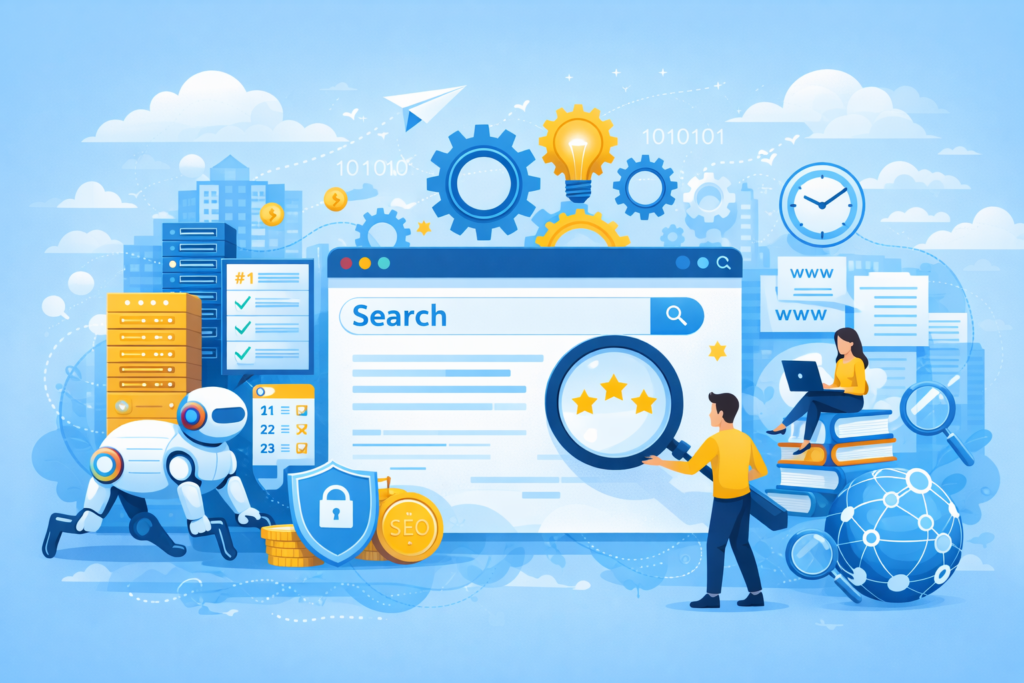
Search engines rely on automated systems to discover, analyze, and rank web content. Understanding this process is essential for effective SEO implementation.
Search engines operate through three core stages:
- Crawling
Search engines discover new and updated pages by following links and sitemaps. Pages that are poorly linked or blocked may not be crawled efficiently. - Indexing
Once discovered, pages are analyzed and stored in a massive database. Google explains indexing requirements in Google Search Central, highlighting the importance of clean code and structured content. - Ranking
Indexed pages are evaluated using ranking signals such as relevance, content quality, and user experience to determine their position in search results.
SEO ensures that websites are optimized at each stage, improving discoverability and ranking potential.
Understanding User Intent in SEO
User intent refers to the reason behind a search query. Google prioritizes pages that best match what users are trying to accomplish rather than those that simply contain keywords.
The main types of user intent include:
- Informational intent
Users are seeking answers or explanations. - Navigational intent
Users want to reach a specific website or page. - Transactional intent
Users are ready to take action, such as making a purchase. - Commercial investigation
Users are comparing options before deciding.
Google highlights intent alignment in Google Search Essentials, explaining that pages failing to satisfy intent may rank poorly even if technically optimized. SEO strategies must focus on intent-driven content to achieve consistent results.
On-Page SEO Optimization
On-page SEO focuses on optimizing elements within individual pages to improve clarity, relevance, and usability. These elements help search engines understand page topics while improving user engagement.
Key on-page SEO components include:
- Page titles and headings
Proper heading structure improves readability and topical clarity. - Content optimization
Content should be informative, well-organized, and written naturally. - Internal linking
Internal links guide users and distribute authority across pages. - Metadata optimization
Titles and descriptions help search engines interpret page purpose.
According to the Moz SEO Guide, effective on-page optimization supports both user experience and crawl efficiency, making it a foundational element of SEO success.
Content Quality and E-E-A-T
Content quality is one of the strongest ranking signals in modern SEO. Google evaluates pages using E-E-A-T, which stands for Experience, Expertise, Authoritativeness, and Trustworthiness.
High-quality SEO content demonstrates:
- Experience
First-hand knowledge or practical understanding of the topic. - Expertise
Accurate, in-depth information created by knowledgeable sources. - Authoritativeness
Recognition from other credible sources in the industry. - Trustworthiness
Transparency, accuracy, and reliable sourcing.
Google’s helpful content guidelines explain that low-effort or copied content offers little value and may negatively impact rankings. SEO content must prioritize usefulness and authenticity to build long-term trust.
Technical SEO Foundations
Technical SEO ensures that a website meets the infrastructure requirements needed for search engines to crawl and evaluate pages effectively. Without strong technical foundations, even high-quality content may struggle to rank.
Core technical SEO elements include:
- Website speed
Faster loading times improve usability and engagement. - Mobile responsiveness
Mobile-friendly design is essential for modern SEO. - Secure connections (HTTPS)
Security signals support trust and credibility. - Indexing controls
Proper use of robots directives and sitemaps.
Google emphasizes performance metrics through Core Web Vitals, which measure loading speed, interactivity, and visual stability. Technical SEO directly impacts how users experience a website and how search engines evaluate it.
Internal Linking and Site Architecture
Internal linking plays a crucial role in guiding users and search engines through a website. A logical site structure improves navigation and ensures important pages receive adequate visibility.
Benefits of strong internal linking include:
- Improved crawl efficiency
Search engines can discover pages more easily. - Enhanced user navigation
Users can access related content naturally. - Authority distribution
Link equity flows across pages strategically.
Google discusses site structure best practices within Google Search Central, highlighting the importance of organized navigation and contextual links for SEO performance.
SEO-Friendly URL Structure
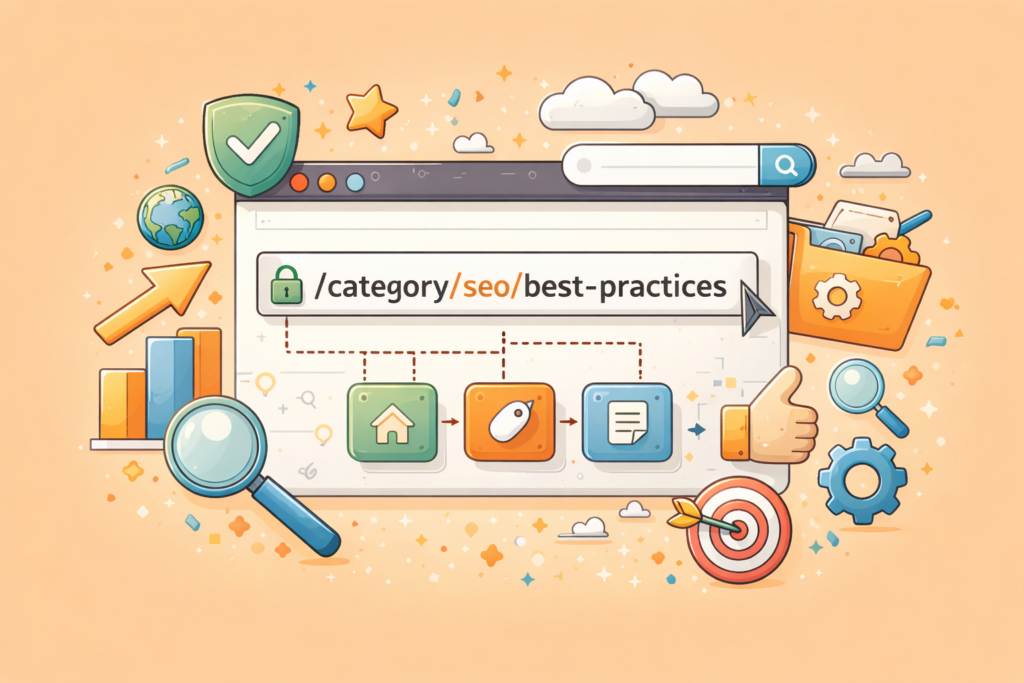
URLs provide important signals about page content. Clean, descriptive URLs help search engines and users understand page topics before clicking.
SEO-friendly URLs should be:
- Short and descriptive
- Free from unnecessary parameters
- Structured logically within site hierarchy
Well-structured URLs improve usability and contribute to clearer indexing signals, supporting overall SEO effectiveness.
Image Optimization for SEO
Images enhance content but must be optimized to avoid slowing down pages or confusing search engines.
Image SEO best practices include:
- Using descriptive file names
- Adding meaningful alt text
- Compressing images for faster loading
- Ensuring responsive display across devices
Google explains image optimization requirements in Google Search Essentials, emphasizing accessibility and performance as ranking considerations.
Off-Page SEO and Authority Building
Off-page SEO refers to all optimization activities that happen outside a website but directly influence how search engines assess trust, credibility, and authority. While on-page and technical SEO focus on internal improvements, off-page SEO validates a website’s reputation across the wider web.
Search engines treat external signals as third-party endorsements. When authoritative websites reference or link to content, it suggests that the information is valuable and trustworthy. Google explains through Google Search Central that links remain one of the strongest signals for evaluating authority when they are earned naturally and editorially.
Key elements of off-page SEO include:
- High-quality backlinks
Links from authoritative and relevant websites signal credibility. - Brand mentions
Even unlinked mentions help reinforce brand trust. - Topical relevance
Authority is stronger when links come from related industries. - Reputation signals
Reviews, citations, and expert references support trust.
Off-page SEO focuses on quality over quantity and aligns closely with Google’s emphasis on natural link acquisition.
Backlinks and Trust Signals
Backlinks are one of the most influential off-page ranking factors. However, not all links carry the same value. Search engines evaluate links based on source authority, relevance, placement, and intent.
According to Search Engine Journal, links embedded naturally within informative content are significantly more valuable than links placed artificially or through manipulation. Google’s algorithms are designed to detect unnatural linking patterns and may penalize websites that attempt to game rankings.
Characteristics of strong backlinks:
- Earned editorially, not purchased
- Placed within relevant content
- Originating from authoritative domains
- Contextually meaningful
Backlinks act as trust signals, helping search engines differentiate between genuinely helpful websites and low-quality or spam-driven pages.
Local SEO and Geographic Relevance
Local SEO focuses on optimizing a website for geographically specific searches. It is especially important for businesses serving defined locations or local markets.
Google emphasizes the importance of local relevance in Google Search Essentials, stating that proximity, relevance, and prominence influence local rankings. Local SEO strategies ensure that businesses appear when users search for services near them.
Core components of local SEO include:
- Consistent business information
Name, address, and contact details must be accurate. - Localized content
Pages tailored to specific locations improve relevance. - Local citations
Mentions across trusted directories support credibility. - User reviews
Authentic feedback influences trust and visibility.
Local SEO connects businesses with users who have immediate intent and geographic needs.
Mobile SEO and Page Experience
Mobile SEO ensures that websites perform effectively on smartphones and tablets. Google uses mobile-first indexing, meaning the mobile version of a website is considered the primary version for ranking.
Page experience plays a critical role in mobile SEO. Google evaluates usability signals such as loading speed, interactivity, and visual stability using Core Web Vitals. Pages that perform poorly may experience reduced visibility regardless of content quality.
Key mobile SEO considerations:
- Responsive design across devices
- Fast loading times
- Touch-friendly navigation
- Readable content without zooming
Optimizing for mobile improves both user satisfaction and search performance.
SEO Analytics and Performance Monitoring
SEO is not a one-time task—it is an ongoing process that requires regular monitoring and optimization. Analytics help measure progress, identify issues, and refine strategies.
Google recommends performance tracking through tools documented in Google Search Central, enabling website owners to analyze impressions, clicks, and indexing status.
Important SEO metrics include:
- Organic traffic growth
- Keyword ranking trends
- User engagement behavior
- Crawl and indexing reports
Data-driven SEO ensures decisions are based on real performance rather than assumptions.
SEO Content Strategy and Consistency
Content strategy is central to long-term SEO success. Search engines favor websites that consistently publish relevant, high-quality content aligned with user needs.
The Moz SEO Guide explains that topical authority is built by covering subjects comprehensively over time rather than publishing isolated articles. Consistency helps search engines recognize expertise within a niche.
Effective SEO content strategies include:
- Publishing in-depth, evergreen content
- Updating outdated information regularly
- Structuring content for readability
- Addressing user questions clearly
A strong content strategy supports authority, trust, and sustained rankings.
Schema Markup and Structured Data
Structured data helps search engines understand page content more accurately. While schema markup does not directly improve rankings, it enhances visibility through rich results.
Google provides guidance on structured data within Google Search Central, highlighting how markup improves interpretation of content types such as articles, FAQs, and business details.
Benefits of structured data include:
- Enhanced search appearance
- Improved click-through rates
- Clearer content context
Structured data supports better communication between websites and search engines.
Common SEO Mistakes to Avoid
Many websites struggle with SEO due to avoidable errors that undermine quality and trust.
Common mistakes include:
- Keyword stuffing
Overusing keywords reduces readability and value. - Ignoring user intent
Content that fails to meet expectations performs poorly. - Low-quality backlinks
Spammy links harm credibility. - Neglecting technical SEO
Poor performance limits visibility.
Google’s helpful content guidelines stress that shortcuts and low-effort practices often lead to long-term ranking declines.
Frequently Asked Questions
What is the primary goal of SEO?
The main goal of SEO is to improve organic visibility by aligning content quality, technical performance, and authority signals with search engine standards.
How long does SEO take to work?
SEO results typically appear over several months, depending on competition, consistency, and website condition.
Does SEO require ongoing work?
Yes. SEO requires continuous monitoring, updates, and optimization.
Are backlinks still important?
Yes. High-quality backlinks remain a strong authority signal.
Is SEO better than paid advertising?
SEO provides long-term value, while paid ads deliver short-term visibility.
Conclusion
Search Engine Optimization (SEO) is a comprehensive, long-term strategy that focuses on building trust, authority, and relevance in organic search results. By combining high-quality content, strong technical foundations, ethical authority building, and continuous performance monitoring, SEO supports sustainable digital growth aligned with Google’s quality standards.
For businesses aiming to strengthen their online presence through structured and guideline-driven optimization, MonthlyWebsiteDesign emphasizes SEO practices that prioritize user value, transparency, and long-term performance rather than short-term gains.